Love is love [or a story about Ego]

What is the biggest fib that you have ever said? What is the worst thing that you have ever done? When I go to church I usually count the eyes that watch every movement I make. Of course, I always fail to reach the final number. There are a lot of eyes in the church but none is as powerful as the eye that stands inside the golden triangle. That particular eye is so big that it needs a pyramid to sit on. That particular eye likes to look inside your guts; it scans and logs every movement of your organs and it makes value judgements according to the state of decay you are in. If your stomach is feeble it means that there is something wrong in you and into your life. But the eye does nothing about it and the brightest answer it can give is always ‘an eye is made for sight, not for healing.’ Well, of course the eye can do nothing about it because it is just an eye. On the other hand, the eye heals the problems of the soul, that ghostly figure which lingers in every living body. Even dogs have it, cats also, horses, even birds.

So, what is the biggest fib that you have ever said? No, of course you didn’t touch your brother’s collection of stamps. No, you did not forget your keys; it is your father’s fault. No, you don’t secretly hate your grandparents sometimes. No, you have never wanted your best friend get hurt. Of course I have never done these things. Sometimes when I hide things I feel powerful, thinking that lies are bricks that build a wall between me and the others.

‘What is your biggest fib again?’ he asked.

‘What do you want from me?’ I asked back.

‘You can’t answer a question with another question. It is not logical. What I want is fear,’ he said.

So, lies are no longer bricks to build a wall but rather pills of fear. Every time I meet a person I have lied to I swallow another pill of fear, without the glass of water that washes the acerbic taste away. Each lie has that acerbic taste on the back of the tongue. It reminds me of how often I lie not only to the others but to myself. To lie to myself, the acuteness of that particular taste is breath-taking in a very bad way.

‘What do you want?’ he asked me.

I said I wanted the truth and he laughed.

Somebody then told me that I have to accept the untruth as well because it is an inevitable part of our existence. Why does it always have to be the truth? So I made a black lie for me in order to feel better. After all, who am I to argue? Oh, but it is I, the indestructible Ego. Then the wind blew and Ego had nothing left and he didn’t feel so indestructible anymore.

‘There is always love!’ Ego howled.

‘Can you sell love? Can you eat it?’ somebody asked Ego.

Ego thought that love is love, you can’t escape it. You feel it in your soul when it happens. The wind blew again and he couldn’t do anything about it. White lies are made to make the others feel better, black lies are made to make you feel better. Ego waited but nothing happened, not even love.

‘You still have friendship!’ Ego howled again.

No one answered this time. So he stood, famished. Nothing happened. Both love and friendship stubbornly refused to materialise.

Then, Ego committed suicide and still nothing happened. Long speeches were held at his funeral and people said he was a good man and he wanted nothing for himself. Some people said that they shall never forget him and that they shall go to his tomb every day. Once, they were too hungry to go and they left Ego alone again.

I still don’t know what your biggest fib is.

Oh, forget about love, I’m famished. We can love again after dinner.

[Dinner]

Oh, forget about love, I’m tired. We can love again in the morning.

[Morning]

Oh, forget about love, I have to go to work. We can love again when I get back.

[Dinner again]

What is your fib again?

[Love is a black lie.]
Pedestrian’s Opium Pipe Dream City

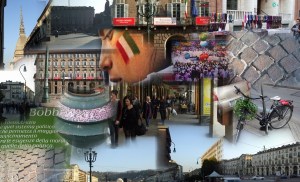
Turin CollageAccording to the English dictionary a pedestrian is a person travelling on foot, in other words a walker, a person who uses his/ her own feet as a mode of transportation. On the other hand, the same dictionary gives another definition for the term pedestrian: something undistinguished, ordinary, for instance when one uses the word in such phrases like pedestrian prose (in a way similar to cupboard literature). Each time I read these last words I can’t help but wonder what a stir they would generate among those who consider themselves pedigreed pedestrians (like myself, for instance). The explanation is always at hand: ‘undistinguished’ because ‘countless’ one may say; or ‘ordinary’ because there are so many that it would take too long to set an on going standard. As such, it is always a question of idleness. How many pedestrians are there? There are countless pedestrians, with countless faces and ordinary shoes. Consequently, when one says ‘pedestrian’ you imagine a sort of breed that is different from the rest of the world just because we use the term ‘pedestrian’ as a differentiating mark. You can say ‘dog’ to all the dogs in the world, on a daily basis, but sometimes you’ll have to specify what kind of dog (in the case of paranoid, self-obsessed dog owners). A person is included in a wider category while a pedestrian is automatically set in a category which is much more narrow than the former. Drivers are again a different species (nervous, angry people who are always late and have a lot of things on their mind). They usually use the non-pedestrian side of the city. I must admit that sometimes there is a sort of war between these two species. You know perfectly that in order to get on the other side of the road you need to use something which is called panda/ zebra/ pedestrian crossing. This is the zone in which a pedestrian is allowed to trespass the driver’s land and reach other promising landscapes. If the panda/ zebra crossing is institutionalised then a pedestrian is considered lucky because higher governmental bodies have made a peace treaty which allows the pedestrians to cross without being taken responsible for the drivers’ wasted time. However, institutionalised pandas are not always at hand and thus the pedestrian is forced to lurch and wait for the appropriate moment. If the moment is badly chosen, then the drivers usually howl making a powerful noise which signifies ‘wasted time on you’. There is also space for revenge: the ‘pedestrians only’ zone. Every driver who trespasses this zone can be easily frowned upon. This is a sort of pedestrian heaven with lots of space and no drivers to look out for. Pigeons can also be found in such places along with the signs which advise not to feed the pigeons. Cities without pigeons are morbidly obese.
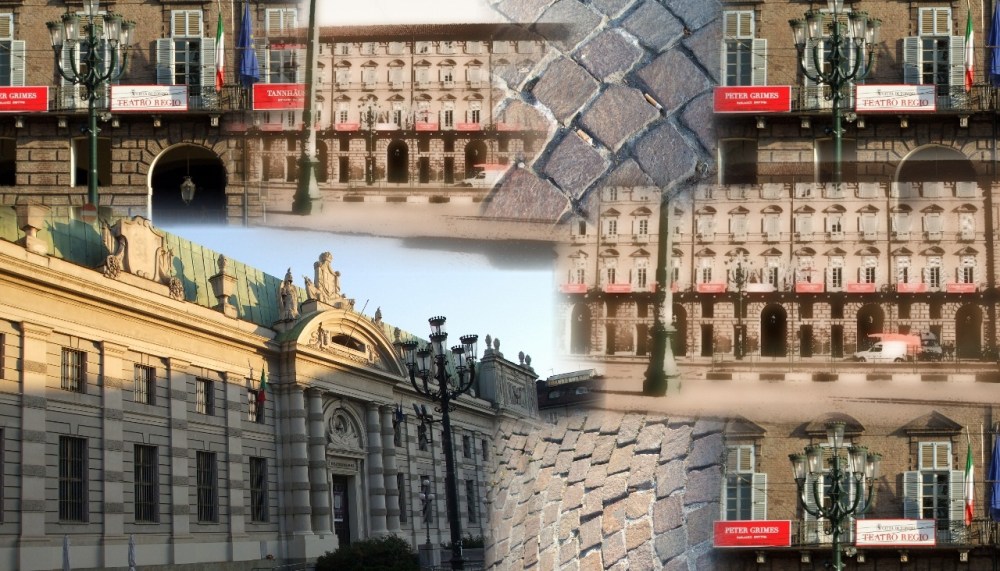
Turin CollagePedestrians are always more numerous than drivers because they tend to occupy less space. The package of metal which is attached to the driver’s body is sometimes oversized according to the social status of the owner. However, does that not mean that bus drivers are necessarily rich just because they drive huge cars, on the contrary. Out of all this, the conclusion is clear: drivers will always be outnumbered by pedestrians. As such, all cities are based on this breed of walkers which constitutes the energy basis. When pedestrians are nowhere to be seen a city is lost just like a body without red cells, without a heart to pump. Pedestrians carry the significance of a city.
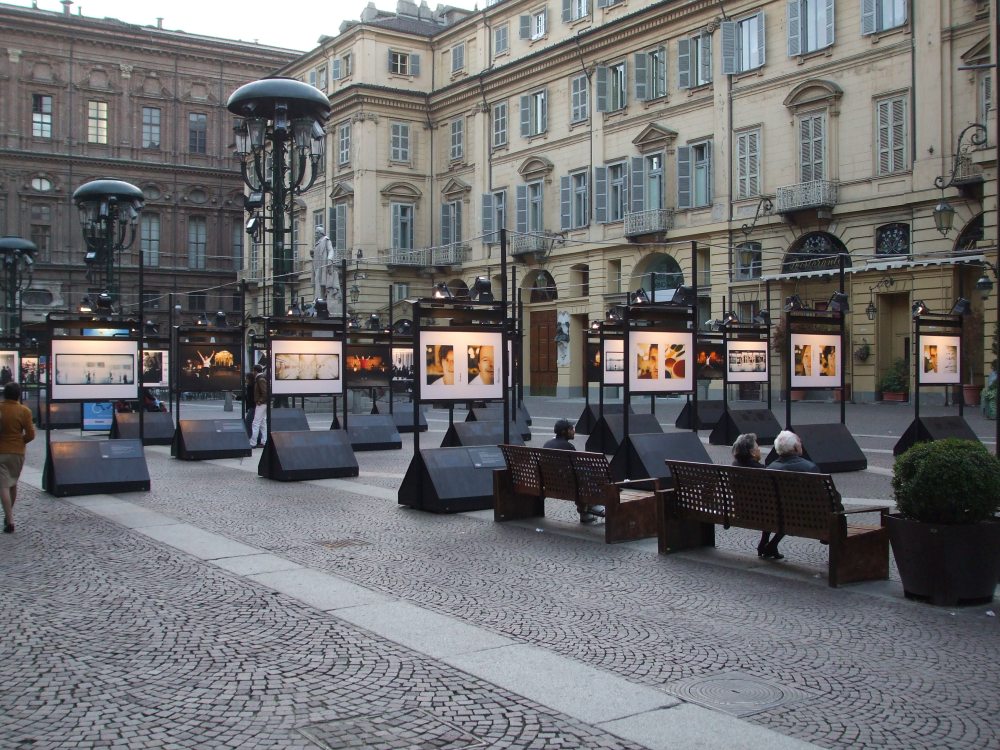
Cities are themselves fantastic creatures. A hypnotic city has always been an important personage of my scenarios. A city like a maze, out of which you cannot escape because it has an inescapable beauty. A city is full of urban lust, it is an accumulation of sounds, smells. A collage of blurry images. No focal points, only the spicy smell of the city like a prostitute behind closed doors and heavily perfumed red rooms. An attractive city is a city you like to check out but not live in. The sole sensation given by the thought of having to experience it every single day is simply fatiguing. An attractive city is a pay-per-view show aired only once. It is effervescent, it shows its glitter only on a short period of time. A city which has become ‘home’ is no longer a city. At home you are no longer the pedestrian capable of alienation but you are rather the pedestrian incapable of alienation. A painful condition in which a city fades by becoming a womb. A majestic city gives the weird sensation that there are no people behind closed windows, that there are no souls behind closed doors. Only pedestrians swarming like bees, filling its streets.

Turin Collage

Inside the pedestrian breed a further distinction can be made between trained and untrained pedestrians. Anyways, what makes a good pedestrian?

The Idiot’s Guide to Good Pedestrianism

First rule: Good, comfortable shoes, namely not new. A good pedestrian knows that new shoes are always uncomfortable. A pair of good snickers is a very good choice.

Second rule: A handy bag. A good pedestrian knows that bulging pockets just aren’t fashionable.

Third rule: A good digital camera, namely not cell phones with cameras. Cell phones with cameras are good only when you want to take a picture of your sleeping-snooring roommate. A pedestrian camera is a real camera because a good pedestrian knows that the sidewalk is always full of adventures and beauty. A pedestrian based culture is always visual.

Turin (Cambio Exposition)

Fourth rule: A map or a sidekick with a map. The location of the streets is always an important aspect of a city.

Fifth rule: A notebook and a pencil. A good pedestrian knows that important things must be taken down on the spot. Some may think that a good memory is enough but it is also known that written things have the capacity to maintain a sort of specificity which is grasped in the moment of writing. Things that catch our eye may seem different when preceded by a sum of impressions.

Sixth rule: Disposable clothes. The weather may change in the meantime: too hot or even too cold. A good pedestrian is always prepared for that.

Seventh rule: A calm spirit. A pedestrian based city needs a good pair of eyes in order to unleash its beauty. Without that a city is almost purposeless.   

Eighth rule: Noble intentions. A good pedestrian knows to appreciate the mighty trash can. A trained pedestrian knows how to assess in a positive way the dirty steps of a famous building. Things are not made to last.

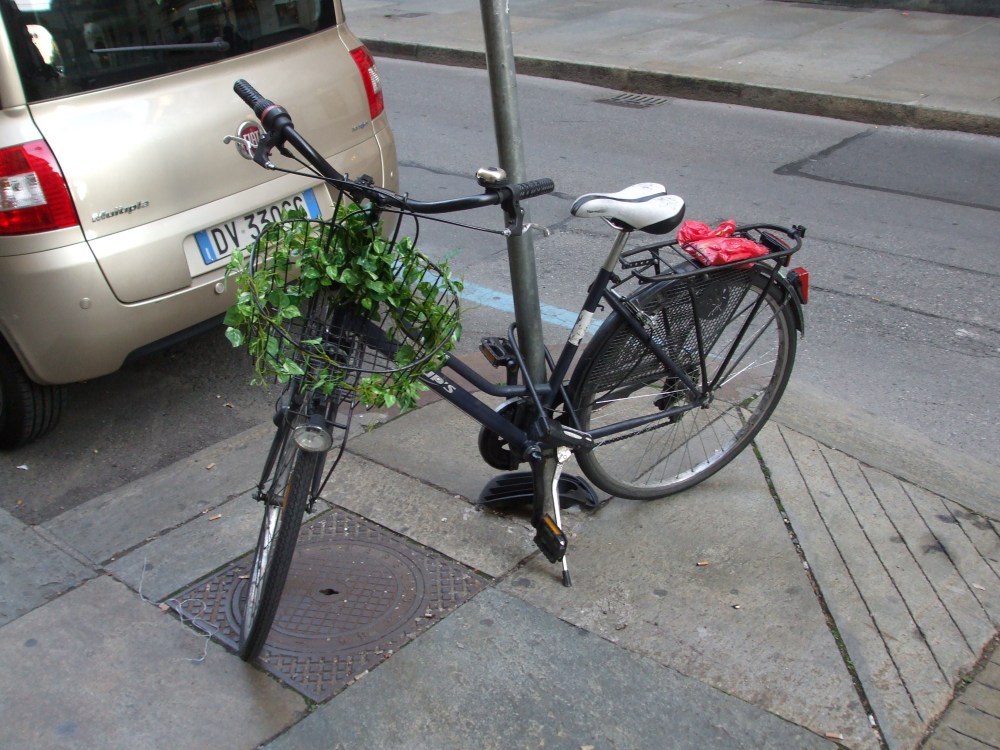
Turin Bycicle

Ninth rule: Patience is a virtue. Buses and institutionalised panda crossings urge pedestrians to extreme patience. A good pedestrian is always patient because he knows that things do not depend entirely on him.

Tenth rule: A good friend, preferably of the same-sex. Conflicting interests do not make a good pedestrian trip.

The Mighty Rule: Pedestrians should never be green with envy on those keep-your-eyes-on-the-road drivers. Cities are made for pedestrians and not for drivers. Drivers have highways surrounded by corn fields.

Long live the pedestrian!

When mortals speak about immortality

immortalityPeople say to other people: enjoy every little thing. For these people, the reason is always the same. Life is short, love/affection is/are the most beautiful thing in the world (sic!), death is near, the list of experiences is very short, live the life etc. This reminds me of Borges’ little story about the immortals. They just stood, immoveable, birds made nests in their hair. The reason was again very clear. Life is infinite, love and affection have no purpose, death is nonexistent, the list of experiences cannot and will not be filled up, there is still time to live that life. Any type of gesture would have no purpose because it could be made again, and again, and again.

I would say that immortality is like a plague. Then, mortality is a blessing. And when mortality is a plague then immortality is a blessing. Other people would say that this is not the immortality one is actually searching for. It is the immortality beyond physical death we are searching for. In this sense, Shakespeare is immortal, Dante is immortal, Hardy is immortal, Mozart is immortal. I would say that the word is incorrectly used. It is true, Shakespeare is immortal, but only in the moment in which somebody in this universe is reading one of his works. Only in the moment is which somebody is thinking about him. This immortality exists, but it has some limits imposed by the absence of physical contact. I would call it one-way-immortality because Shakespeare could not assimilate his own immortality. Only we as readers could do that. Shakespeare is immortal for us but not for himself. The Bard of Avon is caught in that never-ending cycle in which gestures are meaningless. He stands motionless. Literary critics build nests in his hair.

A few years ago I wrote a short story about little things and the way in which they succeed in assimilating a high amount of information. I found this short story today and I’ll use it to vary my point. Again, when I try a sense of alienation the story seems pretty good but I also assume all the risks implied by my lack of literary training. Here it is:


Every morning or, in rare cases, in the afternoon, Mr. Moriendi went to take his dog Suso for a walk at the seaside. The sun and the sand did him good. The salted air combined with the soft light of the blue sky pierced his body with new energies that filled his soul with calmness and delight. His dog shared the same feelings. However, this day was one of those rare cases in which Mr. Moriendi took Suso for a walk in the afternoon and not in the morning because he was held in a “barbaric” manner at his antique’s shop in the city. The evening horizon was loaded with grim clouds of weighty rain that threatened Suso’s hair to become a heavy cloak of stench in the corridors of Moriendi’s house. The ocean was furious and the wind fiddled the waves with fine fingers of cold. Every now and then the gloomy smile of the atmosphere uttered hostile shrieks that filled the air with vibrations of fear. Far away the sounds of a crowded city faded out in the distance.

What a terrible evening!” Mr. Moriendi thought looking at the sky. Conversely, his dog did not mind the gloomy end of the day, actually he was more attracted to a young female standing a few metres from him in the middle of the paved path that came like a snake from the harbour and the vast ocean.

And what a strange thing,” Mr. Moriendi thought, “the wind and the ocean are furious while the sands stand still waiting for something.” The sand always kept memories for him. In his childhood he used to hide things in the sand from his brother’s insatiable eyes. Worthless things, like a toy, or other objects that would present no interests for his brother or other members of his family. One time he made a little ship out of a nutshell and after he got bored from playing with it he buried it in the sand despite the fact that his elder brother asked for it kindly. “It is a precious thing” his brother said, and so did his parents. Later on, he used to make maps to help him recollect the lost objects and to keep up his sense of adventure. In the end he produced a map for his little ship too and gave it to his brother. Now, at almost ninety years old he had no maps to help him find lost memories, or his lost brother, or his friends, or his little ship. He had only a dog, a beautiful house and the still sands of his life’s autumn. But that was fine with him.

Good morning Mr. Moriendi!” somebody said to him.

Mr. Moriendi turned to see who saluted him and recognized Shroudclay, an old mariner of odd appearance. He had a pale face and two black as ebony eyes. Mr. Moriendi hardly knew anything about this strange figure because Shroudclay had a weird habit of appearing just at the moment when somebody was about to die. He did that when Mrs. Moriendi died. The same happened when Mr. Moriendi’s brother died of a heart attack. Besides, the man was obviously talking nonsensical matters because it was evening, but, as to play his childish game Mr. Moriendi replied:

Good morning Mr. Shroudclay, how are you my old friend?

Is there anything peculiar that made you come here, at this moment, at the seaside? A profound feeling, an attraction that was impossible to resist?” Shroudclay asked rubbing his hands against each other.

Nonsense my dear friend, I just had to take Suso for his daily walk!” Mr. Moriendi lied. It was not only Suso. It was the ocean, the salted air, the stillness of the sand that filled his soul with memories. Yes, there was a profound feeling, an attraction impossible to resist.

Would you like to buy something for you little shop?” Shroudclay pronounced the words with a certain anxious tone in his voice as if there was no time to lose and the thing he had in his belongings was one of the biggest treasure in the universe. “It is exceptionally rare and once in a lifetime means there’s no second chance. Actually, you don’t have a choice for this once in a lifetime. It comes alone.” Shroudclay uttered rapidly. A smell of ashes struck Mr. Moriendi’s senses as if something in his nearness was burning at a snail’s pace.

What is it? I am always interested in the peculiar things.” Mr. Moriendi asked quickly. Something from that smell of ashes summoned him like the kiss of an unknown woman. He stared at Shroudclay’s hands with thirsty eyes. With and almost invisible movement Shroudclay took out a little object from his pocket and revealed it to the other man who stood pale and cold in front of him.

A mute cry escaped through the man’s open mouth.

The little ship was the most beautiful thing in the world. It was just as he made it in his childhood. A dry nutshell with a piece of paper and a match stuck in it.

A sharp pain struck his left arm.

The smell of ashes became stronger. The very clothes that covered his body smoked dreadfully.

A sudden blur embraced his vision.

The ocean was furious. The waves hit the shore in intermittent gun shots and there was an unstoppable dog bark.

An albatross crossed the horizon screeching like a lost child.

The Idiot’s Guide to Singing in the Bathroom

Morning Shower[Have you noticed fact: no matter how much you sleep you always feel sleep deprived.]

Taking a shower can sometimes be a cuss, especially when it is already eleven at night and you are bushed and dead beat and you have to wake up early in the morning and you can only think of the few hours that are left until the alarm clock goes crazy. In such cases, when your shower-power-optimism is low, the question that keeps running through our mind is ‘to shower or not to shower’ and we keep assembling the traditional pros and cons towards a decision concerning the mighty shower. I usually think of the relaxing sleep I always have when I take a shower before going to bed, and of the pleasant smell I have in the morning, and the five-more-minutes-sleep I get to have, and the number of good-day-to-you-too I’ll have to say when I get to school. On the other hand, a morning shower is often more effective because you think that it will do more good to you and the fresh-in-the-morning sensation will last longer during the day and stuff like that. However, when I try to detach myself from the state of fatigue in which I find myself when I come back home most of the times I have the feeling that my idleness is often at work in such situations. When you are tired it is obvious that the prospect of a morning shower seems promising and when you have to wake up in the morning it is again obvious that a late night shower was a better idea. And besides, for me mornings always mouth but bad images: horror-stricken multitudes, forgot-to-do things, unpleasant perspectives for the coming day, low blood sugar and the ever-present and inescapable need for more sleep. This is mostly the reason why I consider the late night shower a better solution because it can bring a double-sided satisfaction and can sometimes be fun.

One: use lavender-scented shampoo or shower gel. This kind of products are usually used for children because the lavender scent induces the brain into a hibernation state and it helps babies go to sleep faster. It is pure discrimination not to use it, if babies can use it than you can use it too. Besides, babies don’t need it that much, they sleep all day long so they are not so much sleep deprived as adults are.

Two: you’ll smell like lavender in the morning. That’s a good thing, women just love the smell of lavender. Manly but innocent at the same time.

Three: use the rough side of your bath sponge. It may feel uncomfortable at the beginning but as you get used to it you’ll start having a pleasant flush on your skin. You’ll also feel an extremely pleasing sensation after you are all tucked up in your bed.

The final extreme solution (and the best pro for late night showers): singing under the shower. This will definitely pump up you shower-power-optimism and it will surely make you forget for an instance the late night fatigue. However, there are some steps that you have to take in order for this to work: first, take off your clothes (you must feel sexy if you want to do this), then start singing your favourite song in front of the mirror as loud as you can, then move on to the shower. Don’t stop singing! Make sure that it is a song your neighbours won’t particularly like. It will offer you double satisfaction: no more fatigue and it will get on your neighbours’ nerves (the good-morning-to-you-neighbour will sound cruel in the morning, but it will be mouth-watering for you).

NB: the water is always colder in the morning while the five-more-minutes-sleep is so sweet.

The unavoidable, inevitable, ineluctable

I usually write to forget things and when I actually do that I tend to take down the things which are impossible to forget, things or sensations which are unavoidable because they continue to coexist with you. You could not forget a toothache because it is always there, on your nerves, you could not forget – at least for a while – a person that you have lost, and I do not refer to death or other unfortunate events, you cannot forget a pimple because every time you look in the mirror you shall certainly see the red dot. But you could always forget your keys, your cell phone, your glasses, a book, an umbrella. However, this latter loss is not as painful as the former. And what do mothers do when their 6 months old child is continuously throwing toys all over the place and can’t recover them? They tie the toys to the bed so that recovery is easily possible. The same strategy is applied to adults but only with a slight difference: the strings are invisible. For instance, I have one of my strings attached to my door keys because I know I can’t get out of the house without them. Another string is attached to my phone because I know I cannot survive without it out there, in the open. Another string is attached to my family, another one is attached to you. I leave bookmarks everywhere. Each time I discuss with you I leave a bookmark into your thoughts and you leave one into my thoughts and each time we meet we can easily resume our thoughts. Knowing that the orange juice is in the fridge is a bookmark or a string. At this particular moment I have a bookmark in the fridge because I have some yogurt hidden there. When I wake up in the morning one of my strings automatically attaches to the coffee machine and to the energy drink I keep in the refrigerator. But then I have to pull one of those two strings, it is always a matter of choice. You can also use strings or bookmarks for the past but this process is particularly risky because you don’t actually know when one of the strings stretches too much. Then the string snaps and the 6 months old child starts to cry. Eventually strings and bookmarks get lost and you have to use other strings and bookmarks to get to them. Then you have a sort of web. Then it gets too dark.

They say: brush your teeth! I am aware that brushing my teeth is vital but then I am also aware of the fact that eventually I am going to lose my teeth because things are not made to last forever. To lose your teeth is unavoidable, inevitable and ineluctable. They say: things which are made by man’s hands are not going to last forever! True, but not even the man is made to last forever. Then they say: you need to get at least 8 hours of sleep and 8 hours of active rest. This is the perfect recipe. Then you live happily ever after. But what happens if you can’t sleep or you don’t have 8 hours. You don’t sleep at all. Nevertheless, sleep is unavoidable, inevitable, and ineluctable. Passion is unavoidable, inevitable, and ineluctable. How can you live forever when death is unavoidable, inevitable, and ineluctable? Can you enjoy the moment when the end of it is unavoidable, inevitable, and ineluctable? Be a rebel, be a mutineer they say, be the malcontent. But when you go home you have to wash your feet because they stink and you have to go to sleep. Can you be a rebel in your sleep? You could sleep upside down, you could sleep with your socks on, you could move your feet while sleeping.

Snap, goes the string. This 6 months old baby will grow into a rebel because it won’t stop crying.

One of my ships of death

I was a lot younger when I wrote this poem. At this moment, when I read it again it seems so good. This happens probably because time has passed between the moment of production and the moment of (re)reading. This aspect has always fascinated me: along with the dust that accompanies time there is also a movement at the level of perception. The poem doesn’t seem to be written by my own hand and when I try to experience a sensation of alienation the pleasure of reading is even greater. If I remember well, my ‘ship of death’ was inspired by the reading of Lawrence’s ‘ship of death’ and now I can really sense the influence. It appears that time does not only bring dust, but also pleasure. However, this pleasure is just something temporary because the passing of time is always painful, even inevitably painful. Pleasure follows detachment from this process of passage. Nevertheless, detachment is particularly difficult. Difficult but not impossible. The usage of irony could be a verisimilar solution. Here is the poem I wrote approximately 2 years ago (it may sound pathetic but I assume the risks implied by it):

in life’s autumn

when the eyes turn to gold

towards oblivion

the horizon fills its arms

with dark waters of tears

when the sands of memory

stand still

and no wind disturbs

their mortal immobility

a ship rests…


it has no sloping masts

no dipping prow

it is a tiny ship

like a nutshell

which you could keep

in your pocket

hidden from the eyes

of those who walk the ignorance

into nights of cold

(yes, your parents do that too)


it has little space inside

as little as the word death

it is all you need

when the dancing days are gone

you shall not need elegant clothing

nor fancy buttons for your shirt

nor shoes that shine in the moonlight

nor flamboyant haircuts

but just a white blanket

to cover your soul

it is everything that you have

everything that you need…


it has a match to keep you warm

a book that tells the longest story

to keep you entertained

a piece of paper to catch glimpses

of the whisper of the wind


don’t be angry on those who built the ship

it’s like blaming the dead

the price of your life did not cover

first-class furniture and lcd screens

it is a small ship

it contains everything you placed in it

including food that has gone off


it is your fault

nature’s fault you think

there are things in the ship that you could put

but impossible to take out

the ship contains everything

even worthless things

like your mom’s voice that says

that you should dress properly

in the spring…


you’ll be amazed

you’ll see kings and queens

descend from luxurious dens

to little ships like nutshells

you’ll see yourself floating

towards oblivion

you’ll wonder dreadfully

how could you descend

from luxurious dens

to little ships like nutshells


don’t try to beckon the ship

or try to make another ship

out of a rope and a tree

only when the sands are silent

your ship shall come

and it will be at that moment

the most beautiful thing

that your eyes have seen…

Costi Rogozanu față cu reacțiunea

Nici feminist, nici marxist, nici snob“, Costi Rogozanu este promotorul unui tip de critică literară despre care s-ar putea spune – fără să ne menajarisim – că e pe cale de dispariție, cel puțin în mediile așa zise intelectuale/literare românești. Pe lângă imparțialitatea textelor sale și spiritul critic agresiv, uneori chiar teribilist cu tentă de răzvrătire, Costi Rogozanu încearcă – uneori reușește, alteori se lasă dus de val – să aplice o lectură leală care să îndreptățească atât textul în sine (cel despre care se scrie) cât și posibilii lectori pe care acesta i-ar putea avea pe viitor. Textele sale critice – publicate în presa vremilor sub care ne aflăm, dar și reunite într-un volum apărut în 2006 la Editura Polirom – pun în primul rând problema prejudecăților în lectura unui text. În marea majoritate a cazurilor, un lector, fie el avizat sau neavizat, are tendința – uneori conștientă, alteori inconștientă, indusă de contextul istorico-social în care se află – de a judeca o carte nu din punct de vedere estetic, ci din perspectiva unor aspecte mercantile care idolatrizează textele/figurile ce nu sunt neapărat valoroase. Propunerea pe care criticul în discuție o face, în mod indirect prin atitudinea pe care acesta o vehiculează în raportarea sa la text, este aceea de a lectura o carte fără a fi conștient pe de o parte de numele autorului ce apare pe copertă, de editura care publică volumul (implicit de politicile sale de piață) pe de altă parte. Faima (sau cel putin o biografie bună a) unor scriitori – indusă de cele mai multe ori prin procese de mediatizare ale unor edituri sau ale unor grupuri de interese formate în jurul unor idoli – poate diminua considerabil lealitatea unui critic literar atunci când aceasta e luată drept criteriu în judecarea estetică.

Miza volumului său de debut, intitulat sugestiv Agresiuni, digresiuni, stă nu într-o încercare de a lovi sau de a compromite o posibilă tradiție a privirii critice (o astfel de încercare e negată atât în prefață cât și în ultimul articol din volum) ci de a atrage atenția asupra tendințelor patologice spre care merge gândirea critică românească. Mai mult decât atât, Costi Rogozanu acuză într-o oarecare măsură consumerismul și “frivolitatea mercantilă” care s-a infiltrat în gândirea critică de astăzi argumentându-și poziția prin exemple clare, toate judecate la rece. Una dintre acuzele pe care Costi Rogozanu le aduce are la bază așa-numitul raport discipol/maestru care “s-a insinuat în procesul lecturii” având consecințe grave în procesul receptării astfel încât “cititorul român a fost un discipol perpetuu sub comunism – o atitudine vulnerabilă, care permitea o manipulare perfectă.” Deși contextul istoric/politic s-a schimbat raportul binar continuă să existe dând naștere la clișee de tipul “Salvați cultura!” Răspunsul lui Rogozanu la un astfel de apel patetic e simplu și la obiect: “Nu e nimic de salvat. Trebuie doar făcută și promovată profesionist.” Fiecare declamație căzută în păcatul idolatriei taberelor de intelectuali își găsește reversul medaliei. Studiul literaturii și implicit actul critic se transformă într-un proces de exorcizare, o reanimare a unei literaturi/culturi ce alunecă spre manierism și discursuri bombastice despre personalități care se autoproclamă drept promotori (și salvatori) ai culturii adevărate, cea scrisă cu majusculă. “Limbajul prețios, bătrânicios, autolegitimant predomină în presa noastră culturală.” Această degringoladă carnavalescă îi produce criticului – conștient de urmările pe care le are o cronică negativă atașată unui nume mare din literatura română contemporană – un soi de greață tratabilă doar prin ironie și detașare nu numai față de text dar și față de (pre)judecățile și “inerțiile culturale” care însoțesc textul. Detașarea are ca rezultat o demascare a imposturii așa-numiților intelectuali parveniți. Tratamentul constă în a avea curajul de a spune “Romanul e unul mediocru. Oricât s-au străduit revistele prietene să-l protejeze.

Cu toate acestea, în cronicile lui Costi Rogozanu gestul individual – cel ce are drept țintă ruperea inerțiilor – nu e întotdeauna însoțit de un gest teoretic și tocmai acest lucru îl face pe criticul de față să recurgă la anumite compromisuri ce nu sunt în concordanță cu unele puncte de vedere pe care altădată le susține cu fermitate. Uneori, spiritul său revoluționar își pierde din forță datorită unor schimbări subite de atitudine. Deși textele sale deneagă spiritul mercantil și preconcepțiile atunci când vine vorba de literatură negația directă coexistă cu afirmația indirectă. Astfel, în marea majoritate a cazurilor, pentru Costi Rogozanu e mai important omul/personalitatea (chiar contextul scrierii/apariției unei cărți) decât cartea/textul în sine. Toată această luptă împotriva idolilor se materializează într-o încercare – uneori motivată, alteori nemotivată – de a obiectiva subiectul si de a judeca textul în afara oricărei determinări ajungând pâna la a nega valoarea textului pe considerente economice/politice sau ideologice, sau din motive ce sunt de natură socială. Uneori nu textul e cel care e acuzat – și de cele mai multe ori C.R. se pierde în considerații generale asupra contextului de apariție a cărții – ci omul din spatele textului. Mai mult decât atât, criticul de față propune o metodă de lectură acidă într-un soi de tentativă de a distruge din temelii prejudecățile pe care publicul cititor le are față de un nume sau față de o carte, deși uneori recunoaște că și el acționează sub presiunea unor așa numite prejudecăți. De pildă, la una dintre cronicile sale mărturisește că știa dinainte ce anume avea să scrie despre carte chiar fără o lectură a publicației respective. Un alt exemplu de schimbare subită de atitudine e materializat în una dintre mărturisile făcute de critic în notele ce contextualizează cronicile sale. Astfel, după ce C.R. afirmă cu tărie că recenziile sunt un mod de a câștiga public pentru cartea despre care se scrie și că acestea nu ar trebui să constituie material pentru un volum, criticul se revizuiește (situație similară cu cea a androidului din filmul lui Ridley Scott amintit în prefața volumului) și mărturisește: “Spun că nu e normal să-ți faci o carte din recenzii. Or, tocmai asta am făcut în volumul de față. Așa că mă văd nevoit să mă revizuiesc: este foarte bine să-ți faci cărți din cronici și recenzii!

Un alt aspect interesant în ceea ce privește tipul de scriitură al criticului de față constă în felul în care acesta își tratează/folosește textele. Marea majoritate a cronicilor/recenziilor sale sunt însoțite de o mică notă scrisă cu italice prin care C.R. dorește să “contextualizeze” textul propriu-zis, oferindu-și totodată prilejul de a comenta reacțiile pe care textul său le-a avut în momentul publicării în presa vremii. Acest nou prilej de critică se înscrie într-un gen de proces behavioristic de receptare alcătuit, mai întâi, din o critică la adresa reacției publicului cititor față de textul despre care se scrie (și aici intră contextul apariției, reacțiile “de casă“, editura la care e publicată cartea etc.) și apoi dintr-un alt fel de critică, de data aceasta adresată reacțiilor produse de textul său. De pildă, la recenzia uneia dintre cărțile lui Andrei Pleșu, criticul notează cu o dezinvoltură ironică următoarele: “nu mai povestesc efectele acestei recenzioare, telefoane, replici, plictiseli…” Cu alte ocazii, C.R. admite că a scris și publicat unele texte doar pentru a examina reacția unora.

Cu toate acestea, proiectul pe care Costi Rogozanu îl propune prin felul său de judecare e unul ce are o miză nobilă atâta timp cât nu ajunge în extreme precum relativizarea absolută a valorilor și aplicarea statutului – de altfel negat – de “schimbător al lumii” chiar și în cazurile în care acest statut nu se pretează a fi aplicat, deși recunosc uneori că păcatul idolatriei din cultura română e alive and kicking, la fel ca și multe alte păcate. Să ne ierte mai-marele anonim!

Teatru (englez)/ în limba engleză

Timp de patru ani de zile am jucat teatru și am participat la festivalurile de teatru în limba engleză de la noi din țară doar pentru că eram un liceean ca toți liceenii: în căutarea identității și a acelui ceva care să mă facă diferit de ceilalți. Nu eram singurul, colegii mei de „trupă” făceau exact același lucru. De altfel, a participa la un  festival de teatru în limba engleză  – până și sintagma asta sună pompos – era o formă ciudată de aroganță și mândrie. Ne consideram pe o treaptă mai sus decât majoritatea liceenilor a căror experiență din liceu se limita la orele intensive de română și matematică. A umbla pe holul liceului știind că ai acasă câteva diplome de la o competiție internațională era un fel de paradă în care toată lumea – mai ales colegii care nu erau într-o trupă de teatru – te privea cu invidie sau dimpotrivă, cu admirație. Prima piesă de teatru în care mi-am exersat talentele de actor a fost o piesă originală la care am lucrat toți cei implicați în faimoasa și singulara noastră trupă de  teatru. A fost și piesa la care am depus cel mai mult efort doar pentru că era prima de genul acesta și pentru că trebuia să recuperăm niște ani buni în care alte trupe de teatru din oraș – mai ales cele de la liceele rivale –  adunaseră deja un gram de experiență. Lipseam de la ore pentru că aveam repetiții, era de altfel o scuză foarte bună mai ales că instituția din care făceam parte cu toții își punea speranțele în noi. Prima competiție la care am participat a fost una locală: Drama Day Suceava (o zi dramatică în traducere sic!) un conglomerat de copii de școală generală ce interpretau Romeo și Julieta într-o variantă americănească simplificată și liceeni la fel de aroganți ca și noi. Pentru tânăra noastră trupă de teatru ziua dramatică a fost un început bun: eu am primit premiul pentru cel mai bun actor în rol secundar și premiul pentru cea mai bună engleză, iar trupa în sine a obținut Marele Premiu (o vază mică de metal pe care apoi am folosit-o pe post de suport de lumânare). Reușita a fost un nou motiv de mândrie, nemotivată de altfel pentru că „festivalul” mai sus amintit era un fel de serbare de sfârșit de an școlar în care fiecare clasă își aducea pe scenă copiii cei mai buni pentru a spune o poezie (niște poezii destul de lungi). Scena pe care ne-am interpretat rolurile era ca un podium puțin mai extins care nu avea nici măcar cortină, reflectoare sau sisteme de sonorizare. Am primit diplome și premii de la edituri care doreau să scape de maculatura rămasă din vremuri apuse în sacoșe de plastic frumoase, colorate și oferite cu emfază de către membri juriului. Trebuie remarcat faptul că mai nici un membru din juriu nu avea cunoștințe de limba engleză însă jurizau un festival de teatru în limba engleză și asta conta cel mai mult. Ziarele au vorbit și ele cu emfază despre cât de plină de surprize e noua generație, iar noi eram în al nouălea cer. Cel de-al doilea concurs național la care am participat se numea sugestiv The Ingenious Drama Festival Bacău (pe scurt ID FEST Bacău), organizat de un alt grup de elevi la fel de motivați ca și noi în activități extrașcolare. Diferența dintre noi și ei era că domnii de acolo aveau aroganța mult mai pronunțată decât noi. Partea bună a festivalului era faptul că am avut ocazia de a lucra cu actori profesioniști care au fost destul de drăguți pentru a ne introduce în tainele fabuloase ale teatrului. La fel, domniile lor, nu toate, nu înțelegeau o boabă de limbă engleză, dar aveau ocazia de a regiza workshopuri la un festival de teatru în limba engleză care era deja la a cincea ediție. La un moment dat a fost și un water fight la care nu a participat nimeni și un green party în care nimic nu era verde. Jurizarea a fost și ea de nota zece: președintele juriului – în ciuda faptului că era un actor deosebit – a pronunțat greșit numele trupei (dovadă că nu avea cunoștințe de fonetică a limbii engleze și nu numai de fonetică), aveau și un native speaker o americancă venită parcă de la periferiile Americii (conta că era nativă), iar organizatorul care trebuia să facă parte din juriu era în al nouălea cer atunci când viziona interpretarea noastră și nu a reușit să spună decât că piesa noastră a fost OK. În comparație cu ziua dramatică, festivalul de la Bacău a fost pentru noi o experiență destul de plăcută: am cunoscut oameni noi (pasionați sau nu de teatru), am descoperit cum e să stai într-un cămin timp de cinci zile fără apă caldă și cum e să ai la micul dejun pâine garnisită cu mucigai, plus alte aventuri. În materie de premii, am avut două nominalizări pentru cel mai bun actor respectiv cea mai bună engleză. Zilele au trecut și a urmat o nouă zi dramatică în Suceava și am descoperit că de la an la an oamenii se schimbă. Am primit mâncare mai bună (în loc de franchise am primit pizza), am avut și oameni care să ne arate cum stau lucrurile prin oraș (deși eram și noi natives). Restul a fost la fel: mulțumiri aduse consiliului județean pentru susținerea unui astfel de proiect cultural, mulțumiri aduse membrilor juriului și a tuturor celor care au contribuit la organizarea festivalului (și urma o serie de porecle a unor pletoși), scena a fost același podium extins, fără cortină – spectatorii aveau acces instant la ceea ce făceam noi în presupusele culise – fără sistem de sonorizare – totuși schimbaseră casetofonul – fără reflectoare – lumina era tot timpul aprinsă – același juriu cunoscător în ale limbii engleze. Din lipsă de concurență am primit din nou premiul pentru cel mai bun actor și pentru cea mai bună engleză, iar trupa noastră a primit din nou Marele Premiu (o altă vază, colorată, dar din același material). Restul îl știți, sacoșele și toate cele. Apoi ne-am gândit să schimbăm puțin perspectiva și ne-am înscris la un alt festival de limba engleză din Pitești numit Argeș Drama Festival, organizat de un american numit Michael – celălalt nume nu l-am aflat niciodată. A fost o altă experiență de neuitat: dușuri irlandeze, toalete turcești, garnitură de cartofi piure dizolvat cu apă din belșug, un american care încerca să facă atmosferă însă nu era nicicum credibil, un juriu format din actori extraordinari dar care nu știau limba engleză decât așa ca să înțeleagă ideile principale. Toți participanții au luat premii – dintr-o dorință pacifistă a spiritului american – inclusiv cei care se aflau acolo doar pentru mâncarea de după. Astfel că au fost vreo trei premii pentru cel mai bun actor – unul l-am luat eu – vreo trei pentru cea mai bună engleză – unul a fost al meu – iar trupa noastră a primit premiul pentru cea mai bună piesă și pentru cea mai bună coloană sonoră. A urmat o altă ingenioasă escapadă în orașul bacovian. S-au schimbat și aici lucrurile: mâncare mai bună, apă caldă, puțin mai multă aroganță din partea organizatorilor (se formaseră bisericuțe și instituții de procesare a informațiilor între timp), atelierele de lucru au fost și ele împărțite în grupuri mai mici și mai accesibile, în rest același ritual. Noutatea care ne-a dat peste spate a fost noul președinte al juriului materializat în persoana Gianinei Corondan care, la vremea aceea, nu știa limba engleză și în timpul festivității de deschidere ne tot spunea că organizatorii „put her there” ca să țină speech. Piesa prezentată de noi a fost un fiasco, rezultatele au fost pe măsură. A urmat o a treia zi dramatică care s-a încheiat în același mod ca și celelalte două doar că vaza era din nou schimbată, la fel și casetofonul și juriul (președintele juriului din primele două ediții nu-și putea lua ochii de pe o fătucă, membru al aceluiași juriu). Singurul festival de teatru în limba engleză de care îmi amintesc cu plăcere este cel din Arad, Teen Play. În ciuda faptului că am fost cazați la un centru de plasament pentru tineri fără locuință și în ciuda faptului că la un moment dat una dintre toalete s-a înfundat iremediabil răspândind arome nu tocmai plăcute, totul a fost bine organizat iar experiența teatrală a fost pe măsură. Pe scenă au rulat numai piese bune interpretate la fel de bine, jurizarea a fost impecabilă. Am obținut un singur premiu, pentru cea mai bună engleză, iar sacoșa nu era plină de maculatură. Deși cronologic vorbind festivalul de la Arad nu a fost ultimul la care am participat am preferat să-l plasez în final pentru a lăsa o impresie plăcută. Lăsând la o parte orice ironie astfel de activități sunt lăudabile din perspectiva obiectivelor pe care acestea le au: oferă posibilitatea unei interacțiuni culturale și sociale între elevi din orașe diferite, școli diferite, dându-le prilejul de a se manifesta într-un alt mod și de a învăța limba engleză pe alte căi, mai interesante decât cele tradiționale.