Michael Ondaatje and the Aesthetics of Violence

Jim Morrison, an American poet and singer, once said that human beings fear violence less than their own feelings because ‘personal, private, solitary pain is more terrifying than what anyone else can inflict’. If we are to dig deeper into this matter, I believe Morrison brought to the fore a really persuasive argument concerning the nature of violence. From a terminological point of view, violence has often been defined as an act of aggression which usually occurs in the presence of resistance, in the context of trespassing predetermined rules or laws. Still, bearing in mind Morrison’s words, there is something which escapes this definition of violence. Phenomenologically, violence is related to the phenomenon of suddenness, its boundaries are always confined to a delimited span of time and space. Its occurrence is acute but short, and that is why ‘solitary pain’ is much stronger than the one inflicted by somebody else, because private pain extends the limits of violence, it makes it unpredictable, with no end in sight. However, from the point of view of a literary aestheticism…read more.

The Baptiser

His left shoe got stuck. The humid leather refused to let go. So he sat on the rocky shore of the river and pulled the shoe with both hands until it gave in. He placed the shoe symmetrically next to the other one and looked at them with a boyish pride. Then watched as the river went like a snake between the sharp corners of a bare mountain. It was a sunless day. Still, it was a promising day, he had thought. Let yesterday die with its shameful face, he said to himself. That morning had to be a blessing. On his way to the waiting spot he met a very young fellow with a handsome face and such apparitions were rare except those people who stopped their cars and took pictures of him. This young fellow did not have a camera and was wearing a rather fancy suit. The only strange thing was that he had a little notebook and took notes. So he must have been one of those sent to test his faith or to see if he was still doing his job. He works in mysterious ways. The people with the cameras were also testing his faith. Each time they came he could barely stop himself from swearing and doing obscene gestures with his hands. But good-looking fellows were a good sign.

The greenish water shyly caressed his toes. It was cold as ice. And smelly too. But suffering is a virtue of the flesh, just like pleasure. Still, pleasure has nothing to do with it, at least not here, not now. A few meters away the mouths of three sewers opened hungrily. A guardian at the gates of an unknown hell tied together with an endless highway. People in cars coming and going.

Today is the day. The water is so cold.

He forgot his stick on the shore. He went back to get it. Then resumed his position, ankles completely submerged in the slimy water. He could see his toes from time to time. And feel the numbing sensation of cold. So he waited for somebody to come and ask for his services.

And then the day drew to an end. The next morning the young fellow came again and took notes in his little notebook. He wore a different shirt but the same fancy suit. Then another day ended and the next morning the same fancy suit took notes. And every morning the same thing. He must have been a customer.

Then he asked the fancy suit what his name was and his name was Ycnaf Tius. And what kind of name is that. It was his father’s name and the name of his son and the name of his future grandchildren. And the name of his wife was also Ycnaf Tius. And how do you call your city? Horse, Ycnaf Tius replied. And every object bears this name, horse. And how do you say ‘I go to sleep every night’? And Ycnaf Tius said ‘I go to horse every horse’. Linguists were working day and night to simplify the vocabulary and the syntax so lately everything was horse, horse, horse. ‘I go to sleep every night’ becomes ‘horse horse horse horse horse horse’. And so horse (on) and so horse (forth). Et horse (etcetera).

Would you like to be baptised? He asked Ycnaf Tius.

Horse horse horse horse horse horse. Ycnaf Tius replied.

I said would you like to be baptised into the true faith? He asked Ycnaf Tius again.

Horse horse horse! Ycnaf Tius replied and left. He never came back. Other people came instead of him and they all spoke the same language. Kids laughed at him, pointing and saying ‘horse horse horse horse horse!’ He took every horse in silence pretending not to hear. By night groups of horses attacked him, by day his vision was flooded with white doves.

People came and questioned him but he refused to answer. He kept repeating the word ‘dove’.

Dove dove dove, dove dove dove dove dove dove dove dove dove dove!

The Forbidden Sip

I share my bed with visions of white nights and an illusory craving for sleep. During the night the mirror is like an open hand. In the dark the mirror resembles a sweaty palm. When I look into the sweaty palm I see you and your eyes are like pores. I turn the mirror over the sheets and I can see your elbows. I see everybody’s elbows. All the people in this world have elbows and every cup of tea would be incomplete without an elbow. I could put my finger under your elbow and pull you out of the sweaty palm. I take the cup to my lips and feel the odour of boiled leaves of tea and lemon. Each time I pull you to my lips I hold you by your elbows. That is why in the morning your elbows look like the smooth white ceramic of a teacup. You smell like lavender. I’m thirsty but the cup is empty and you say I shall never have this drink because it is forbidden. By the use of malevolent hands this drink is cautiously hidden under many layers of elaborate movements and mind traps. And thoughts and islands that swim in never-ending oceans. I’m thirsty and I want to have a sip. So I go back to the mirror in my room and have a sip from it. The mirror that once reflected you. And say get off me. Nobody’s going to take care of your flowers while you are gone. This sip is forbidden. People shall look at you with a wicked eye. I cannot deny the sculpted look of this cup resembling your parted lips. I cannot say that here. The mirror has eyes and might talk. I plant olive trees every time I want to have that forbidden sip. Have a mouthful of it. I still have enough space for olive trees. So I play, play, play with this shirt of yours. I can’t find my words between its folds. You haven’t used too many words here. Just the usual stuff I guess, nice weather, really hot outside today, it is the time of the year when true beauty comes out. You throw words like crab apples. So I play, play, play with the sheets. I try to find some lost word. I look at you and try to forget about the grapes. I watch you and forget about the olive trees. None of your words is lost. I can see that. They’ve trained you well. So we stand asunder, far away from each other because this sip is forbidden. In one of the other lives we stood hand in hand. In this one we have to be apart.

Sip and stop.

And for once, when the chatter of steps is lost, you become an extension of my arms. And for once, your shoulder puts mine into place. Because they can’t see we can use pillows instead of wings. They can’t see we live by wires and lines that with time dig deeper into the skin and tell stories about us. The frontier of the skin is a collection of our lives. They can’t see because they confuse the approach of death with the occasional loss of memory and the petrified threads of grey hair forgotten in the bathroom sink.

Sip and stop. Sip and stop. And sip and stop and sip and stop and stop and sip and stop and sip and stop.

This love is falling apart

I couldn’t be that far. On my way out I smoked two cigarettes. Add that to your daily list of things. One. He smoked two cigarettes on his way out. Two. I feel nothing. Three. I stopped the elevator between floors to cry, hoping that somebody would hear me. Four. Nobody heard me. I wept and I wept until my weep turned into gibberish. Five. I am not weeping in the house. Six. He might hear me and ask questions. […] Twenty-nine. He used the red towel today. Thirty. He never uses the red towel on Wednesday. Fifty-five. Too much aftershave. The smell is like a blanket.

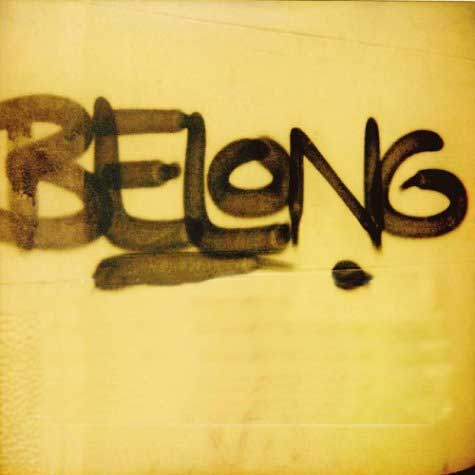
I am far enough. People can’t see me here because I don’t belong to them.

Sixty-three. Sang in the bathroom today. Sixty-four. Showered longer than usual. Took a peek through the keyhole. Memo to myself: hide the red towel. Take it out only on Wednesday.

She is probably looking through the keyhole. She hid the red towel under the blue towel. I have nothing to say about that. Really. I need to have some sleep. Alone. In the bathtub. I am afraid to love her. She might crumble. How can I not do that. Really.

126. This should stop. 127. I am afraid to love him. 128. He might crumble. 130. Really.

I left the keys where she left them. On the table.

140. I left the keys where he left them. 141. On the table.

I look into the mirror.

167. I look into the mirror.

We are like twins.

189. We are like twins.

The perils of morning life

There is this smell which comes from the middle of your chest every morning. The smell of cradled skin and lavender remnants from a late night shower. As you draw your breath out of the many deaths you have tried on for the last four hours I can smell your toothpaste and the digested events that made your life yesterday. Thoughts like the crumbs left behind by this shy machinery called dreaming. We stand suffocated into a room where there is no space for drollery or resentment. Here I’m afraid you are going to wake up and not like me anymore, like the child you were nineteen years ago, filled with the joyful expectancy that, any moment now, somebody will come in and bring you another dog, younger and cuter than the one you already have. I can’t change my face just like that. It takes years of pain and suffering until, out of mere mercy, one of your gods steps over his pride and uses ten percent of his brain to change me into somebody else. And only after that decision, it takes about forty years until the lines start appearing like wrinkles. Those are the lines along which death will take pieces from you, and then put you back, reshape you, erase any leftovers and shove you into another woman’s body and then wait patiently. Until you are ready to be a patient again, etherized upon the white sheets washing machines weave carefully. But you will be gone by then, transported with the patience of perverse gods dressed in white robes into another woman’s body sucking your future out of that woman’s nerves, anxieties, and an absentminded father. But then younger and cuter dogs will come and every morning will be different. I shall stand beside you, but in another shape, death’s recovered patient who now lives a normal life. With you, but alone, thinking that the biggest present for your birthday would be this illusory other whom I imagine keeping in my inner pockets, feeding it with the illusory sweetness of words, telling it illusory stories about others who lived just like us and nothing happened to them while doing it.

You finally wake up and tell me that I couldn’t possibly know that because I don’t know how mornings felt to them.

I can see it now, there, under your smile. You had your first wrinkle today. Don’t you feel etherized?

The Gargoyle

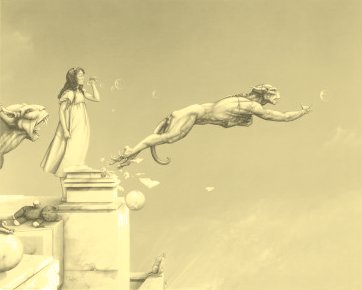
The coolness of the wall pierced through his shirt. People were screaming and running, hunted by the mortifying silence of a city with too many tall buildings. One of them followed his steps and sat beside him, leaned against his shoulder in that murky corner, then left. They often lose interest and leave, he said to himself.

People came to him in silence and went away screaming.

For so many times his mother told him not to stay alone in silence.

Silence will kill you, she would say.

She knit a hat with a little bell on it. Each movement was a sound until he couldn’t make the difference between movement and sound.

He would sound not walk, making sounds was like walking.

But then the silence grew stronger and the bell died away. Walking became walking again, rare, a language of signs. His fingernails grew long and turned ash gray. His mother knit another bell.

The radio caterwauled: cathedrals in town were inaugurating new statues and artist were currently working on new ones, more realistic than the old ones. Mother was knitting a string of little bells.

One day, an artist came to visit him and was utterly fascinated by the perfection of his body.

Then each shirt, each pair of trousers had little bells on them but silence grew mightier than ever.

That cursed artist took him away and the bells were left alone. He never went back home because he couldn’t. The artist had told him to stay still and so he sat, looking over this city with too many tall buildings.

On perils and grapes

your skin grows in my hands,/ like an orange peels itself into the hands of children

then every object I touch is softer,/ each of them has margins of whisper

in every object your skin grows,/ your fingers are like table legs

the smoke of your cigarette is growing like a vine into my kitchen

your hands go around the coffee cup and the chair,/ and grapes grow into your hair

then your skin smells like a cheap wine. (10th of May 2010)

Here and There

I don’t remember who I was ten years ago, even though a friend told me once that all those memories could be easily recovered through hypnosis. I don’t trust people who use hypnosis, I told him. There is a sort of perversity in the use of hypnosis. Then he told me that I don’t need to know who I was ten years ago because that information is frivolous. Yes, I was frivolous ten years ago. That information is lost in a series of sunny mornings and hot afternoons. Then there is autumn, school, winter, and summer again. Back to those sunny mornings, hot afternoons, and that ice-cream thirst. That cold pang in the middle of your forehead when you eat your ice-cream too fast. Pink girls and blue boys playing outside in the shadow of a red roof house. But what about me, I asked this friend of mine. He said that there was no ‘me’ ten years ago. Yes, I was not there ten years ago. I was not there because I was somewhere else. And that ‘somewhere else’ was not mine, it belonged to somebody else.

Even today, you belong to somebody else, my friend told me.

You may say that this friend of mine is a very intelligent creature. There were many times when I believed this to be so. Who do I belong to, I asked him. I couldn’t tell, he said.

Today, as it was ten years ago, my memories belong to somebody else.    

Smoking Allowed

SHE SAT DOWN. The waiting room changed faces, caught colour over the metallic chatter of chairs and windows. She pulled the purple scarf closer to her skin and threw her hair back. The intense light coming from the huge windows made her seem dark, an unknown figure to the passengers that entered the waiting room. Her fingers clutched the purple scarf and loosened it.

Bags, cases and suitcases came and went in silence. No one talked, all smoked.

She looked up from where she was sitting. A young man came to her while desperately trying to find something in his pockets. She smiled but he didn’t see it. He took out a cigarette and pushed it softly against his lips. Her hands slid down her thighs and rested on her knees. She kept looking up at him waiting as if the briquette was dead without her vigil.

A wheeled suitcase passed them making an annoying rumble.

Occasional coughs disturbed the smoky silence.

He sat down beside her. The waiting room changed moods, colours roared through the metallic flutter of chairs and windows. He pulled his leather jacket tighter to his shoulders and drew a long breath of smoke from his cigarette then slowly pushed it out. As he sat down he became another dark figure in the room, another unknown outline to the passengers that entered the waiting room. He looked at her and smiled but she did not see it.

Above the window a black and gold sign said Smoking Allowed. No one talked, all smoked.

He bent forward with his elbows on his knees and looked down. She leaned with her head against his left shoulder while stroking his blonde hair. He took the cigarette to his lips and took a long breath. The cigarette burned like a red eye against their dark figures. She turned her face towards the window and rested her chin on his shoulder while violently blinking as to stop a tear from coming out. He took another long breath and spit it out.

Suitcases came and went like in a big dance routine. No one talked, all smoked.

The cigarette was more than half done. She came closer to him as if to smell him. Her face rested on his neck for a while and he propped his cheek against her dark hair caressing it gently. She gave an arid kiss to his neck. He smiled but she didn’t see it. Nobody saw it. They were two unknown figures in a waiting room, on a metallic bench, beside a gold and black sign which said Smoking Allowed.

Flight seventeen bound for Bern is now boarding at gate six. No one talked, some walked away.

The cigarette was almost finished. She nested her hand inside his and moved it continuously like a baby in a womb. He brushed her hand with his fingers. With one long breath the cigarette was finally over. He pushed it against the metallic rubbish can and then threw it away. He gave a short kiss to the corner of her mouth and stood up to search for his passport. She looked up as another man came to sit beside her.

The other man sat down beside her and took out a pack of cigarettes while searching his pockets for a lighter.

Bags, cases and suitcases came and went in silence. No one talked, all smoked.

The young man found his passport and made a sign with his head to the girl. It was probably time to go. He offered to help her up. She stood up and looked at her bag.

‘Do you happen to have a lighter?’ the other man asked her. She suddenly looked at him.

‘I’m sorry, I don’t smoke!’ she answered and quickly went away to catch up with the young man.

(END)          

  

Throb, twitch and pant

Great things make you twitch. First, you are aware of it because a twitch makes itself visible inside absence of movement. The beginning of a song, or generally speaking, the sudden appearance of sound, makes your eardrum twitch because the first sound that touches it is different from the silence that was before. When you run your muscles twitch in order to produce movement. When you speak your speaking organs have continuous twitches in order to distinguish sounds one from the other. When you write the muscles of your fingers twitch in order to distinguish a letter from the previous and the following one. When somebody wants to frighten you it is enough to produce a strong sound preceded by a long silence or to appear suddenly into an empty space or into your visual field. Apparently, when you are not prepared you are aware only of what happens before and after the twitch. Silence and the song has already begun, rest and the run has already begun, blank and the letter has already appeared on paper. Great things happen in our absence.

I wonder what happens when you are prepared.

The first note from a musical piece opens a river of sounds, the first sentence of a novel opens an entire horizon. You open your mouth and the sounds come out as you want them to be. You caress the paper with the tip of your fountain pen and the ink starts to flow making letters and then words, sentences. You want to run and the muscles start moving as you want them to move.

When you are not prepared every throb, twitch and pant is just another throb, twitch and pant.

And what or how is the twitch that comes accompanied by a great thing? How is the twitch that comes with the beginning of a great song? I think that there is a difference between the twitch that comes in actual speech and the twitch that comes with the reciting of a poem; between running and dancing; between a shopping list and the creation of a poem or a novel. That particular throb, twitch and pant is not just another throb, twitch and pant…