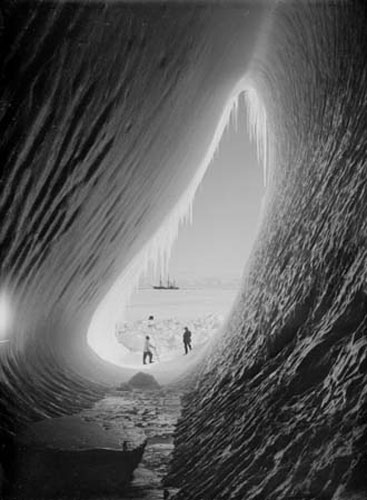
When an idea exclusively occupies the mind it is transformed into an actual physical or mental state. (Swami Vivekananda)
THE RADIO caterwauled in the alabaster room sounding like faraway shrieks into the dry sepulchre silence: “men wanted for hazardous journey, small wages, bitter cold, long moths of winter, constant danger, safe return doubtful, honour and recognition in case of success.”
He opened his eyes as the Arctic air pierced his nostrils. The white blanket of the bed surrounded his body like a placenta.
‘Awakening’, he thought ‘moment of all disasters, mornings mouth but bad images.’
Limbs crack like the branches of an old tree. The ceiling looked icy as if the immense sky itself revealed its face. The pendulum of a huge rococo clock knelled like heart beats under a pack of ice.
He stood up. A tall young man in his late twenties. A tumbled beauty with basilisk eyes deepened in the skull, the effects of innumerable sleepless nights.
The radio caterwauled again like a kvetching: “it is a beautiful December morning with lots of snow and a front of cold air coming from the south. This is radio Polheim and we invite you to spend the day with the best music in the world!”
He drew back his head and gazed far from beneath his veiled eyelids. The window was half opened. The cold settled like dust in the corners of the room. Condensed wind fiddled with the curtains. A warm heavy sigh of unwelcome air came through the half opened door and curled behind the door knob. He paused by the door and looked over the long hall. A tranquil brightness sparkled in his eyes. The end of the hall seemed out of reach but a hypnotic hundred headed whiteness summoned him from the gliding door. All the other doors were closed.
‘Nobody’ he thought ‘Pan’s sleep, a faunal morning.’
He stepped swiftly forward like a fox. One of the doors opened with a painful creak. He halted. A breath of hot air filled the hall touching his frozen cheeks. Gazed back to the end of the hall: cold, vast, incandescent: form of forms, a delight to the human senses. Then a voice, bitter toned and sustained.
‘Are you up? Scott! Come here you mug!’
An equine face with slanted glasses, thick hair and scraggy neck appeared in the half opened doorway.
‘Good morning Amundsen’ Scott said gloomily while entering the room. Gelid light and air filled the atmosphere. Made him feel a bit peckish. A wave of lethargy, sleeping sickness in the air.
‘It’s noon and you still come to me for wisdom Odin you mug!’ Amundsen stopped and looked attentively at the pale face framed in wavy black hair. ‘You’ll have to pay this time, but I’m afraid your eyes won’t do anymore Odin. Look at them mug! They’re all shattered for this world but good for something else, hm? What you say, Odin?’Amundsen swallowed his words like a hungry dog. Amundsen took out and devoured a cigarette and the heat mesmerised with time in a grungy dance.
‘You know who the apple of my eye is!’ Scott exclaimed with a weak joy.
Amundsen’s mandibles trembled with rage as if a silent scream wanted to get out of his throat. His eyes went around the room searching for something specific but as he could not find it returned to the man standing in front of him.
‘You must not go! You are not yet prepared! Oh, if youth but knew the greatest thing – the way in which you are equipped – the way in which every difficulty is foreseen, and precautions taken for meeting or avoiding it.’ He stopped and inhaled through his arched nostrils. ‘Victory awaits him who has everything in order – luck, people call it!’
Scott frowned. The hundred headed whiteness summoned him. All doors were closed.
‘Everything is settled now. There is nothing in this world that can change it’ he answered firmly.
Amundsen drew back in anger but recollected quickly, a deep frown touching his alien figure.
‘Defeat is certain for him who has neglected to take the necessary precautions in time. This, my boy, is called bad luck!’
Everything that Amundsen uttered was in vain. Scott’s eyes reflected only one thing: deep infinite ice, a flower of death that grew merciless on the top of a rounded Earth. An open skull. His face grew whiter. Breath rolled from his mouth in short frosted puffs even though the room was overheated.
‘Niflheimr’ Amundsen muttered.
A gurgling voice echoed coming from the hall.
‘Amundsen, Scott, are you up?’ Another man came in the room. He looked tired but there was something youthful in his looks. ‘Come along, I’ve made you a nice hoosh, the nicest you have ever tasted!’
Neither Scott nor Amundsen answered. The man rejoiced.
‘The grub is ready! Amundsen, wake up! Pemmican, biscuits and water!’
Painful reality.
‘Good morning Shackleton!’ Amundsen kept quiet.
‘It’s noon already Scott. You must have passed out again because of the cold in your gory room. I told you to turn the heating on. You’re going to freeze to death. Look at you! Aren’t you cold? Put some clothes on you!’ Shackleton halted observing that the man standing in front of him changed in colour.
For the first time since he got up, Scott noticed that he had only a pair of short trousers on. The cold did not disturb him at all. He resembled an alabaster statue standing in the middle of a borderless white. A woeful lunatic giving of an odour of wax and rosewood, a faint odour of wetted ashes. His face loomed with curious spectral whiteness as if suddenly remembered in a dream.
‘He suffers from GPI’ Amundsen said.
‘You’ve got a letter from that girl…eh, what was her name, yes…Emily.’ Shackleton took out a pink envelope from his pocket. ‘It looks like an invitation to a party. You should go! You’ve got to get out of this hall. Polheim is a vast labyrinth.’
‘You know I can’t go, I have other important matters to attend. I must reach the South Pole.’
Amundsen intervened screaming like a choked cat.
‘General paralysis of the insane!’
Thoughts beset Scott’s brooding brain. Deep down, he knew everything was made to change his mind: the delicious hoosh, the invitation to that party, Amundsen talking angrily about that Niflheimr rubbish. But his eyes looked other ways. The hundred headed whiteness seduced him. A white dessert framed his horizon, the sun low in the sky. Bitter cold and a skua flying in circles. The british flag floating like a falcon over the icy ground. He was trapped. The skull flower grew like a plague. It conquered muscles, fibres, cells. He had no other ideas but one.
‘What about the South Pole, hm? What about the South Pole, Amundsen? Have you been there?’ Shackleton asked.
Amundsen grew pale. Yellow teeth crept on his thin lips in a vampire gesture of anger. To ask him about the South Pole was similar to asking a poet what he meant in a certain poem. Words came out with a threatening fist.
‘Niflheimr’ he stopped, eating his breath. ‘How dare you?’ he turned swiftly towards Scott, ‘want to know my opinion about it? Niflheimr will eat you like a wolf. You’ll come back to Polheim dead. If you ever come back!’ A large grim smile appeared on his face. ‘Go. Please! You have my approval!’
A speck of eager fire from the pair of basilisk eyes thanked him.
This is what he waited, an approval. The hall had a precise end: hundred headed whiteness and a colourful stain: the British flag. All doors were closed. He took up that particular idea. Made that idea his life – thought of it, dreamt of it, lived on it. Let the brain, muscles, nerves, every part of his body breathe that idea. He looked in Shackleton’s eyes and found sympathy, same thirsty whiteness.
‘Then I must leave’ he thought ‘fresh air helps memory.’
He went to the door firmly.
‘What do you think you’re doing?’ Shackleton asked.
Scott did not turn. His back looked like an engraving of Trojan wars.
‘I’m just going outside and may be some time…’
‘We won’t disturb you mug! Hear me! You bet on it! Niflheimr will swallow you like a whale. You shall hear Heimdall blow his large bassoon! It is then when you’ll say good God, this is a terrible place!’ Amundsen shrieked and stopped like a tired dog. His vacant face stared pityingly over the ghost that went out of the room and limped down the hall.
The alabaster hall was still and empty. Scott walked slowly with heavy steps. He could still hear Amundsen swearing and Shackleton trying to calm him down.
The cold domed room waited in silence like a dying cat. Scott looked back at the long hall. Sodom, Gomorrah, Edom…But his den seemed different this time. It seemed like the cold had altered in a strange way its dimensions of time and space. Two lines crossed each other: an undersized space of time through undersized times of space. The satin ceiling lowered and the opened window seemed an open mouth. Mouth of cold. Hungry. Dry mouth. Ready to swallow whatever came in its way. The bed, an icebreaker that ate the floor. The blanket, a mother’s breast. Outside, the wind roared into the air like a thousand voices under the window pan.
A drop of sweat drew a line over his nose. With trembling hands he tried to wipe it but his fingers were numb. He did not know whether his fingers were cold as ice or his forehead. Looked down at his feet. Blue plated feet. Sweat trickled down his sternum and spine. Tried to move but his muscles tightened in a pre-shivering muscle tone. Hands and feet began to ache with cold.
‘It’s now or never’ he thought.
The rafter lowered radically in a gesture of attack and the floor contracted like moving sands. Wind roared again. Airs romped around him, nipping and eager airs. Snow fell like a curtain over the immense stage of the horizon, darkening it. Rising. Flowing. Scott stepped forward with pain.
‘Great god!’ he muttered ‘this is an awful place!’
The hundred headed whiteness spread like a plague. The sky was nowhere. It was like the sun sunk deep in the earth. Deeply deep. The white sunken cunt of the world. Wind roared like a fog horn. Gut piercing cold. He was now trembling violently as his body attained its maximum shivering response: an involuntary condition in which the muscles contract rapidly to generate additional body heat.
But where was the skua? He could at least have the skua.
The snowfall became heavier, but it was not snow, it was time itself falling from the sky in a Lucifer-like fall. It was impossible to look into the future. A blind flight.
‘Good God! Where am I?’
Amnesia. Apathy. Stupor. A toothless terror. Desolation. White horror seared his flesh. Felt a powerful urge to urinate. The only thing he felt at all.
‘I told you Niflheimr shall eat you alive!’
Two shadows appeared from the snow. One of them came closer, so close that Scott could feel its breath steaming his eyes. The other shadow remained like a statue.
‘You were not ready’ said the first shadow ‘this was the worst journey in the world’, it paused, ‘polar exploration is at once the cleanest and most isolated way of having a bad time.’
The snow contracted catching the two shadows under its folds. Wind roared with rage.
Torpor.
Air suddenly turned his other cheek. It got warmer by the second though the snow came in waves as Scott struggled for a surface fight. It was like somebody poured hot wine into his veins.
Suffocating heat.
Scott pulled his cap off, and then his coat, sweater. Naked from the waist up. A woeful lunatic giving of an odour of wax and rosewood, a faint odour of wetted ashes. Shackleton and Amundsen.
Rococo clock packed in ice. Limbs cracking like the branches of an old tree. Ache.
The flag! He completely forgot about the British flag, his hands and feet numb.
‘It’s OK’ he thought, a thought that filled him with hope ‘I can still crawl!’
Covered himself with the flag and made two steps on his knees and elbows. Looked up as he felt the need to scream.
Thousand knives.
There it was: the Norwegian flag floated like a falcon over the icy ground.
He fell in a sudden pet.
Memories beset his brooding brain.
Snow, bitter death.
The white blanket of the bed surrounded his body like a cocoon.
The radio caterwauled in the alabaster room sounding like faraway shrieks into the dry sepulchre silence: ‘men wanted for hazardous journey, small wages, bitter cold, long moths of winter, constant danger, safe return doubtful, honour and recognition in case of success.’
 the silence of blood is like going backwards in a song. the silence of steps resembles two hands placed side by side. blood is not gushing forth, blood like a friend, the voice of a soprano heard from the outside. others are full of expectations. even love is expected to gush forth. just like blood love shall not gush forth. love is swallowed and there’s no pride in it. so don’t march. there’s no glory in it if it doesn’t gush forth. because love has nothing to do with blood.
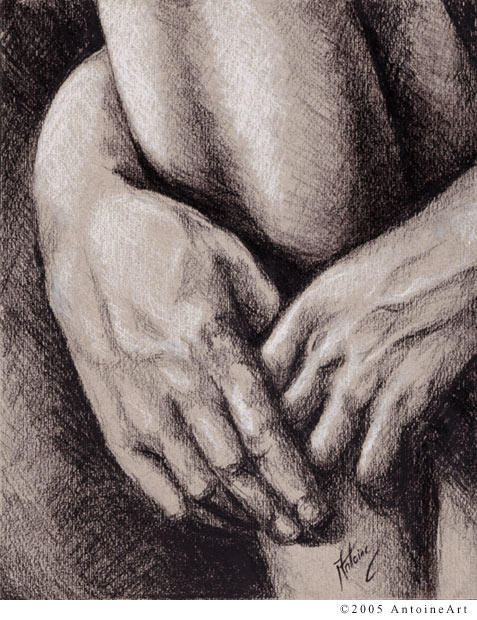 out of this I shall rise like a saint. my feet as dense as the water though solitude won’t make you virtuous like a well-kept virgin. solitude grows with the stillness of the idle. and tomorrow you will push me into a corner of the eye. and I’ll place my hands side by side begging for love to gush forth. and you will be helped by other thoughts to pass by me.
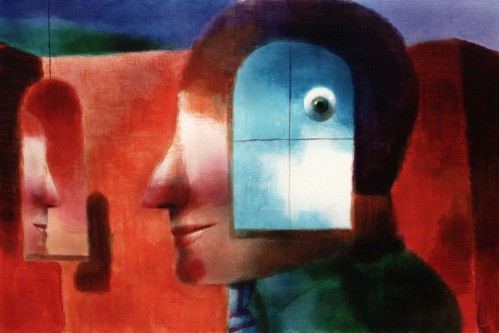


 The Doubtful Recluse