My Second Letter to an Absent friend

I do, it is true, it is as you say. I live by my artless art of fiction when I fictionalize you, because next time we meet I’ll try, as much as I could, to live by the things already settled in words written during the morning. You see, mornings are not always about coffee, they’re also about fiction because since you do not exist what else can I do but seek you in the most absurd places. On top of the fridge, I think it’s the most obvious place. Then, when you sit with me at the table I know for sure you do not exist because there is only one cup, and one spoon, and only one croissant, half eaten. I try to eat the other half but I can’t because I know your lips have touched it and if I were to feel you scent on it then I’ll know for sure you do not exist. This morning I noticed something very strange: the croissant was missing and the cup of coffee was empty. I checked it twice to avoid one of my existential fears. I forgot to tell you about it, about this existential fear of mine. I’m afraid that at one moment somebody is going to come to me and say that I haven’t done a thing that I already did, and I won’t be sure whether I had done it or not. So then I’ll be shocked because I’ll lack the possibility of saying that I’m sure I did it, because I checked it twice. When I switch the light off in order to go to bed I check every room twice to see if there aren’t any burning candles even though I know there are no candles in the house. So the croissant was missing, and you were missing too. You weren’t on top of the fridge. I even tried the restroom to see if you haven’t drowned into the toilet. I checked it twice. And I panicked because you did not leave any note on the fridge. I tried to fictionalize this disappearance but it didn’t work, so I tried to fictionalize you again but you appeared to have blue eyes and not yellow as you used to. I checked every corner of the house but you weren’t there. Then, something even weirder happened. Somebody else got into the house and I tried to talk to him but he wouldn’t listen. He looked right through me like I didn’t exist. I noticed some similarities between you and him, the same hair, almost the same clothes, except the eyes. He had blue eyes, you have yellow eyes.

He even sat at your computer and started writing something which I couldn’t understand, something about an absent friend with yellow eyes. So I left him alone and went to the restroom to wash my face hoping that this illusion would soon vanish and you could come back. But as I looked into the mirror, as normal people usually do, I noticed that my eyes had suddenly changed, and they were yellow. Yes, I’m sure of it. I checked it. Twice.


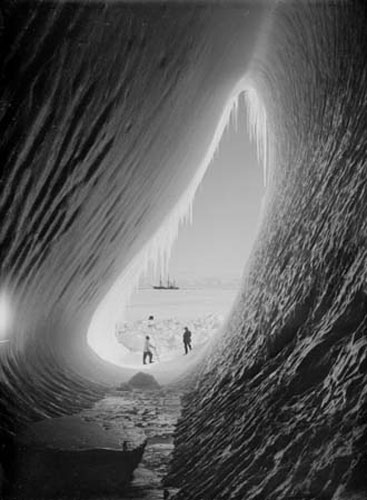
To the South Pole, (a short story about the coldness of ideas)

When an idea exclusively occupies the mind it is transformed into an actual physical or mental state. (Swami Vivekananda)

THE RADIO caterwauled in the alabaster room sounding like faraway shrieks into the dry sepulchre silence: “men wanted for hazardous journey, small wages, bitter cold, long moths of winter, constant danger, safe return doubtful, honour and recognition in case of success.”
He opened his eyes as the Arctic air pierced his nostrils. The white blanket of the bed surrounded his body like a placenta.
‘Awakening’, he thought ‘moment of all disasters, mornings mouth but bad images.’
Limbs crack like the branches of an old tree. The ceiling looked icy as if the immense sky itself revealed its face. The pendulum of a huge rococo clock knelled like heart beats under a pack of ice.
He stood up. A tall young man in his late twenties. A tumbled beauty with basilisk eyes deepened in the skull, the effects of innumerable sleepless nights.
The radio caterwauled again like a kvetching: “it is a beautiful December morning with lots of snow and a front of cold air coming from the south. This is radio Polheim and we invite you to spend the day with the best music in the world!”
He drew back his head and gazed far from beneath his veiled eyelids. The window was half opened. The cold settled like dust in the corners of the room. Condensed wind fiddled with the curtains. A warm heavy sigh of unwelcome air came through the half opened door and curled behind the door knob. He paused by the door and looked over the long hall. A tranquil brightness sparkled in his eyes. The end of the hall seemed out of reach but a hypnotic hundred headed whiteness summoned him from the gliding door. All the other doors were closed.
‘Nobody’ he thought ‘Pan’s sleep, a faunal morning.’
He stepped swiftly forward like a fox. One of the doors opened with a painful creak. He halted. A breath of hot air filled the hall touching his frozen cheeks. Gazed back to the end of the hall: cold, vast, incandescent: form of forms, a delight to the human senses. Then a voice, bitter toned and sustained.
‘Are you up? Scott! Come here you mug!’
An equine face with slanted glasses, thick hair and scraggy neck appeared in the half opened doorway.
‘Good morning Amundsen’ Scott said gloomily while entering the room. Gelid light and air filled the atmosphere. Made him feel a bit peckish. A wave of lethargy, sleeping sickness in the air.
‘It’s noon and you still come to me for wisdom Odin you mug!’ Amundsen stopped and looked attentively at the pale face framed in wavy black hair. ‘You’ll have to pay this time, but I’m afraid your eyes won’t do anymore Odin. Look at them mug! They’re all shattered for this world but good for something else, hm? What you say, Odin?’Amundsen swallowed his words like a hungry dog. Amundsen took out and devoured a cigarette and the heat mesmerised with time in a grungy dance.
‘You know who the apple of my eye is!’ Scott exclaimed with a weak joy.
Amundsen’s mandibles trembled with rage as if a silent scream wanted to get out of his throat. His eyes went around the room searching for something specific but as he could not find it returned to the man standing in front of him.
‘You must not go! You are not yet prepared! Oh, if youth but knew the greatest thing – the way in which you are equipped – the way in which every difficulty is foreseen, and precautions taken for meeting or avoiding it.’ He stopped and inhaled through his arched nostrils. ‘Victory awaits him who has everything in order – luck, people call it!’
Scott frowned. The hundred headed whiteness summoned him. All doors were closed.
‘Everything is settled now. There is nothing in this world that can change it’ he answered firmly.
Amundsen drew back in anger but recollected quickly, a deep frown touching his alien figure.
‘Defeat is certain for him who has neglected to take the necessary precautions in time. This, my boy, is called bad luck!’
Everything that Amundsen uttered was in vain. Scott’s eyes reflected only one thing: deep infinite ice, a flower of death that grew merciless on the top of a rounded Earth. An open skull. His face grew whiter. Breath rolled from his mouth in short frosted puffs even though the room was overheated.
‘Niflheimr’ Amundsen muttered.
A gurgling voice echoed coming from the hall.
‘Amundsen, Scott, are you up?’ Another man came in the room. He looked tired but there was something youthful in his looks. ‘Come along, I’ve made you a nice hoosh, the nicest you have ever tasted!’
Neither Scott nor Amundsen answered. The man rejoiced.
‘The grub is ready! Amundsen, wake up! Pemmican, biscuits and water!’
Painful reality.
‘Good morning Shackleton!’ Amundsen kept quiet.
‘It’s noon already Scott. You must have passed out again because of the cold in your gory room. I told you to turn the heating on. You’re going to freeze to death. Look at you! Aren’t you cold? Put some clothes on you!’ Shackleton halted observing that the man standing in front of him changed in colour.
For the first time since he got up, Scott noticed that he had only a pair of short trousers on. The cold did not disturb him at all. He resembled an alabaster statue standing in the middle of a borderless white. A woeful lunatic giving of an odour of wax and rosewood, a faint odour of wetted ashes. His face loomed with curious spectral whiteness as if suddenly remembered in a dream.
‘He suffers from GPI’ Amundsen said.
‘You’ve got a letter from that girl…eh, what was her name, yes…Emily.’ Shackleton took out a pink envelope from his pocket. ‘It looks like an invitation to a party. You should go! You’ve got to get out of this hall. Polheim is a vast labyrinth.’
‘You know I can’t go, I have other important matters to attend. I must reach the South Pole.’
Amundsen intervened screaming like a choked cat.
‘General paralysis of the insane!’
Thoughts beset Scott’s brooding brain. Deep down, he knew everything was made to change his mind: the delicious hoosh, the invitation to that party, Amundsen talking angrily about that Niflheimr rubbish. But his eyes looked other ways. The hundred headed whiteness seduced him. A white dessert framed his horizon, the sun low in the sky. Bitter cold and a skua flying in circles. The british flag floating like a falcon over the icy ground. He was trapped. The skull flower grew like a plague. It conquered muscles, fibres, cells. He had no other ideas but one.
‘What about the South Pole, hm? What about the South Pole, Amundsen? Have you been there?’ Shackleton asked.
Amundsen grew pale. Yellow teeth crept on his thin lips in a vampire gesture of anger. To ask him about the South Pole was similar to asking a poet what he meant in a certain poem. Words came out with a threatening fist.
‘Niflheimr’ he stopped, eating his breath. ‘How dare you?’ he turned swiftly towards Scott, ‘want to know my opinion about it? Niflheimr will eat you like a wolf. You’ll come back to Polheim dead. If you ever come back!’ A large grim smile appeared on his face. ‘Go. Please! You have my approval!’
A speck of eager fire from the pair of basilisk eyes thanked him.
This is what he waited, an approval. The hall had a precise end: hundred headed whiteness and a colourful stain: the British flag. All doors were closed. He took up that particular idea. Made that idea his life – thought of it, dreamt of it, lived on it. Let the brain, muscles, nerves, every part of his body breathe that idea. He looked in Shackleton’s eyes and found sympathy, same thirsty whiteness.
‘Then I must leave’ he thought ‘fresh air helps memory.’
He went to the door firmly.
‘What do you think you’re doing?’ Shackleton asked.
Scott did not turn. His back looked like an engraving of Trojan wars.
‘I’m just going outside and may be some time…’
‘We won’t disturb you mug! Hear me! You bet on it! Niflheimr will swallow you like a whale. You shall hear Heimdall blow his large bassoon! It is then when you’ll say good God, this is a terrible place!’ Amundsen shrieked and stopped like a tired dog. His vacant face stared pityingly over the ghost that went out of the room and limped down the hall.
The alabaster hall was still and empty. Scott walked slowly with heavy steps. He could still hear Amundsen swearing and Shackleton trying to calm him down.
The cold domed room waited in silence like a dying cat. Scott looked back at the long hall. Sodom, Gomorrah, Edom…But his den seemed different this time. It seemed like the cold had altered in a strange way its dimensions of time and space. Two lines crossed each other: an undersized space of time through undersized times of space. The satin ceiling lowered and the opened window seemed an open mouth. Mouth of cold. Hungry. Dry mouth. Ready to swallow whatever came in its way. The bed, an icebreaker that ate the floor. The blanket, a mother’s breast. Outside, the wind roared into the air like a thousand voices under the window pan.
A drop of sweat drew a line over his nose. With trembling hands he tried to wipe it but his fingers were numb. He did not know whether his fingers were cold as ice or his forehead. Looked down at his feet. Blue plated feet. Sweat trickled down his sternum and spine. Tried to move but his muscles tightened in a pre-shivering muscle tone. Hands and feet began to ache with cold.
‘It’s now or never’ he thought.
The rafter lowered radically in a gesture of attack and the floor contracted like moving sands. Wind roared again. Airs romped around him, nipping and eager airs. Snow fell like a curtain over the immense stage of the horizon, darkening it. Rising. Flowing. Scott stepped forward with pain.
‘Great god!’ he muttered ‘this is an awful place!’
The hundred headed whiteness spread like a plague. The sky was nowhere. It was like the sun sunk deep in the earth. Deeply deep. The white sunken cunt of the world. Wind roared like a fog horn. Gut piercing cold. He was now trembling violently as his body attained its maximum shivering response: an involuntary condition in which the muscles contract rapidly to generate additional body heat.
But where was the skua? He could at least have the skua.
The snowfall became heavier, but it was not snow, it was time itself falling from the sky in a Lucifer-like fall. It was impossible to look into the future. A blind flight.
‘Good God! Where am I?’
Amnesia. Apathy. Stupor. A toothless terror. Desolation. White horror seared his flesh. Felt a powerful urge to urinate. The only thing he felt at all.
‘I told you Niflheimr shall eat you alive!’
Two shadows appeared from the snow. One of them came closer, so close that Scott could feel its breath steaming his eyes. The other shadow remained like a statue.
‘You were not ready’ said the first shadow ‘this was the worst journey in the world’, it paused, ‘polar exploration is at once the cleanest and most isolated way of having a bad time.’
The snow contracted catching the two shadows under its folds. Wind roared with rage.
Torpor.
Air suddenly turned his other cheek. It got warmer by the second though the snow came in waves as Scott struggled for a surface fight. It was like somebody poured hot wine into his veins.
Suffocating heat.
Scott pulled his cap off, and then his coat, sweater. Naked from the waist up. A woeful lunatic giving of an odour of wax and rosewood, a faint odour of wetted ashes. Shackleton and Amundsen.
Rococo clock packed in ice. Limbs cracking like the branches of an old tree. Ache.
The flag! He completely forgot about the British flag, his hands and feet numb.
‘It’s OK’ he thought, a thought that filled him with hope ‘I can still crawl!’
Covered himself with the flag and made two steps on his knees and elbows. Looked up as he felt the need to scream.
Thousand knives.
There it was: the Norwegian flag floated like a falcon over the icy ground.
He fell in a sudden pet.
Memories beset his brooding brain.
Snow, bitter death.
The white blanket of the bed surrounded his body like a cocoon.
The radio caterwauled in the alabaster room sounding like faraway shrieks into the dry sepulchre silence: ‘men wanted for hazardous journey, small wages, bitter cold, long moths of winter, constant danger, safe return doubtful, honour and recognition in case of success.’

Letter to an Absent Friend

I know you do not exist, but I have to tell you this. I’m sending you this letter because I do not know what else I should do. Because every morning I wake up with the thought that I have to send you this letter, that I have to use these words and tell you the things nesting into the folds of my brain. I’ve read hundreds of books about you and the way you lure people into liking you, loving you, and finally obsessing over you. One of those books specifically talked about the way in which you switch faces and genders because ultimately you do not have a face or a fixed gender. You are a man when somebody needs a man, and a woman when somebody needs one, or both, when, at night, you cajole whores into believing that you are their saviour and have come to redeem their promiscuous souls. Or when you wake up adolescents by knocking at their window twenty minutes to four, when sleep is the sweetest. It is when you take the appearance of an androgynous creature that you are most frightening. Painters have seen you a couple of times, I think, because there are many paintings in which I have seen your haunting figure. A man, yet a woman. A creature made out of muscles, yet bearing the softness and the vices female beauty provokes into innocent meat. Each time you come with such cherubic temptation, your words honeyed, mellifluous voice, and I cannot keep you away from me because only the thought of you makes me riant. You are breathtakingly beautiful because you display the beauty that I have never seen, embody the things that I will never have, and at first I did believe you when you said you were a part of another world. This world could not have fashioned a thing like you. But then I thought you were a thing of this world because I’ve seen you change faces, manipulate boys and girls into making love to you. I’ve seen the kisses your lips have recorded along the way, smelled all the smells that have crept into your skin until now, saw the flickering images on your retina, felt the vibrating passion in your words. I’ve realised yesterday that you have your own world and I will never be a part of it. Your world is made out of sleepless nights and dreams dreamt with the loudness of music, colourful dresses and black suits, distant smiles received from unknown people and Beauty sitting at the next table smoking. You live in places where true beauty comes out to play. You said I should come with you, visit the others, see the world, send distant smiles. But I cannot be a part of your world, you see, that’s not my thing. I do not have the words you have because I have nothing to talk about except those awfully real things like the uncomfortable chair and the possibly unwashed mug. I do not need your mercy, I can do it by myself. So do stay away from me! Still, you come with such angelic temptation, honeyed words and mellifluous voice…

A. S. Byatt and the Elemental Storyteller

Stories or narratives – as they are frequently called – have been shared in every culture and in each land as a means of amusement, cultural edification, continuation of civilization and last but not least to instil moral principles. As long as humanity has had language as a means of communication storytelling has existed. Oral storytelling was used as a way of passing on culture, knowledge and wisdom from a generation to the other, to educate the younger members of the society, to entertain and to explain more or less the world around them. Consequently, most of the stories were allegories of the human kind and their struggle for continuation, their adventures and findings, in other words their metaphorical travel between cradle and grave. Each of these stories inculcated in the younger members of the society a sort of respect for the positive aspects of the world, for their origins, for their way of living and for their customs. In fact, human beings have always had the tendency to construct narratives for themselves and that is the thread we follow from one day to the other. People who crumble as personalities are those individuals who lost that string. Man is without doubt a storyteller. His continuous search for a purpose in life, a cause, an ideal, is the struggle in finding a plot and an outline in the progress of his existence, his life story, a story which is without pattern and meaning.

However, as time passed, the evolution of technology has changed the apparatuses available to storytellers, and stories gained a more aesthetic value as partially different from the ethical value. With the dawns of writing, the use of symbols to represent language stories started to be transcribed…read more.

The Baptiser

His left shoe got stuck. The humid leather refused to let go. So he sat on the rocky shore of the river and pulled the shoe with both hands until it gave in. He placed the shoe symmetrically next to the other one and looked at them with a boyish pride. Then watched as the river went like a snake between the sharp corners of a bare mountain. It was a sunless day. Still, it was a promising day, he had thought. Let yesterday die with its shameful face, he said to himself. That morning had to be a blessing. On his way to the waiting spot he met a very young fellow with a handsome face and such apparitions were rare except those people who stopped their cars and took pictures of him. This young fellow did not have a camera and was wearing a rather fancy suit. The only strange thing was that he had a little notebook and took notes. So he must have been one of those sent to test his faith or to see if he was still doing his job. He works in mysterious ways. The people with the cameras were also testing his faith. Each time they came he could barely stop himself from swearing and doing obscene gestures with his hands. But good-looking fellows were a good sign.

The greenish water shyly caressed his toes. It was cold as ice. And smelly too. But suffering is a virtue of the flesh, just like pleasure. Still, pleasure has nothing to do with it, at least not here, not now. A few meters away the mouths of three sewers opened hungrily. A guardian at the gates of an unknown hell tied together with an endless highway. People in cars coming and going.

Today is the day. The water is so cold.

He forgot his stick on the shore. He went back to get it. Then resumed his position, ankles completely submerged in the slimy water. He could see his toes from time to time. And feel the numbing sensation of cold. So he waited for somebody to come and ask for his services.

And then the day drew to an end. The next morning the young fellow came again and took notes in his little notebook. He wore a different shirt but the same fancy suit. Then another day ended and the next morning the same fancy suit took notes. And every morning the same thing. He must have been a customer.

Then he asked the fancy suit what his name was and his name was Ycnaf Tius. And what kind of name is that. It was his father’s name and the name of his son and the name of his future grandchildren. And the name of his wife was also Ycnaf Tius. And how do you call your city? Horse, Ycnaf Tius replied. And every object bears this name, horse. And how do you say ‘I go to sleep every night’? And Ycnaf Tius said ‘I go to horse every horse’. Linguists were working day and night to simplify the vocabulary and the syntax so lately everything was horse, horse, horse. ‘I go to sleep every night’ becomes ‘horse horse horse horse horse horse’. And so horse (on) and so horse (forth). Et horse (etcetera).

Would you like to be baptised? He asked Ycnaf Tius.

Horse horse horse horse horse horse. Ycnaf Tius replied.

I said would you like to be baptised into the true faith? He asked Ycnaf Tius again.

Horse horse horse! Ycnaf Tius replied and left. He never came back. Other people came instead of him and they all spoke the same language. Kids laughed at him, pointing and saying ‘horse horse horse horse horse!’ He took every horse in silence pretending not to hear. By night groups of horses attacked him, by day his vision was flooded with white doves.

People came and questioned him but he refused to answer. He kept repeating the word ‘dove’.

Dove dove dove, dove dove dove dove dove dove dove dove dove dove!

The Forbidden Sip

I share my bed with visions of white nights and an illusory craving for sleep. During the night the mirror is like an open hand. In the dark the mirror resembles a sweaty palm. When I look into the sweaty palm I see you and your eyes are like pores. I turn the mirror over the sheets and I can see your elbows. I see everybody’s elbows. All the people in this world have elbows and every cup of tea would be incomplete without an elbow. I could put my finger under your elbow and pull you out of the sweaty palm. I take the cup to my lips and feel the odour of boiled leaves of tea and lemon. Each time I pull you to my lips I hold you by your elbows. That is why in the morning your elbows look like the smooth white ceramic of a teacup. You smell like lavender. I’m thirsty but the cup is empty and you say I shall never have this drink because it is forbidden. By the use of malevolent hands this drink is cautiously hidden under many layers of elaborate movements and mind traps. And thoughts and islands that swim in never-ending oceans. I’m thirsty and I want to have a sip. So I go back to the mirror in my room and have a sip from it. The mirror that once reflected you. And say get off me. Nobody’s going to take care of your flowers while you are gone. This sip is forbidden. People shall look at you with a wicked eye. I cannot deny the sculpted look of this cup resembling your parted lips. I cannot say that here. The mirror has eyes and might talk. I plant olive trees every time I want to have that forbidden sip. Have a mouthful of it. I still have enough space for olive trees. So I play, play, play with this shirt of yours. I can’t find my words between its folds. You haven’t used too many words here. Just the usual stuff I guess, nice weather, really hot outside today, it is the time of the year when true beauty comes out. You throw words like crab apples. So I play, play, play with the sheets. I try to find some lost word. I look at you and try to forget about the grapes. I watch you and forget about the olive trees. None of your words is lost. I can see that. They’ve trained you well. So we stand asunder, far away from each other because this sip is forbidden. In one of the other lives we stood hand in hand. In this one we have to be apart.

Sip and stop.

And for once, when the chatter of steps is lost, you become an extension of my arms. And for once, your shoulder puts mine into place. Because they can’t see we can use pillows instead of wings. They can’t see we live by wires and lines that with time dig deeper into the skin and tell stories about us. The frontier of the skin is a collection of our lives. They can’t see because they confuse the approach of death with the occasional loss of memory and the petrified threads of grey hair forgotten in the bathroom sink.

Sip and stop. Sip and stop. And sip and stop and sip and stop and stop and sip and stop and sip and stop.

This love is falling apart

I couldn’t be that far. On my way out I smoked two cigarettes. Add that to your daily list of things. One. He smoked two cigarettes on his way out. Two. I feel nothing. Three. I stopped the elevator between floors to cry, hoping that somebody would hear me. Four. Nobody heard me. I wept and I wept until my weep turned into gibberish. Five. I am not weeping in the house. Six. He might hear me and ask questions. […] Twenty-nine. He used the red towel today. Thirty. He never uses the red towel on Wednesday. Fifty-five. Too much aftershave. The smell is like a blanket.

I am far enough. People can’t see me here because I don’t belong to them.

Sixty-three. Sang in the bathroom today. Sixty-four. Showered longer than usual. Took a peek through the keyhole. Memo to myself: hide the red towel. Take it out only on Wednesday.

She is probably looking through the keyhole. She hid the red towel under the blue towel. I have nothing to say about that. Really. I need to have some sleep. Alone. In the bathtub. I am afraid to love her. She might crumble. How can I not do that. Really.

126. This should stop. 127. I am afraid to love him. 128. He might crumble. 130. Really.

I left the keys where she left them. On the table.

140. I left the keys where he left them. 141. On the table.

I look into the mirror.

167. I look into the mirror.

We are like twins.

189. We are like twins.

The perils of morning life

There is this smell which comes from the middle of your chest every morning. The smell of cradled skin and lavender remnants from a late night shower. As you draw your breath out of the many deaths you have tried on for the last four hours I can smell your toothpaste and the digested events that made your life yesterday. Thoughts like the crumbs left behind by this shy machinery called dreaming. We stand suffocated into a room where there is no space for drollery or resentment. Here I’m afraid you are going to wake up and not like me anymore, like the child you were nineteen years ago, filled with the joyful expectancy that, any moment now, somebody will come in and bring you another dog, younger and cuter than the one you already have. I can’t change my face just like that. It takes years of pain and suffering until, out of mere mercy, one of your gods steps over his pride and uses ten percent of his brain to change me into somebody else. And only after that decision, it takes about forty years until the lines start appearing like wrinkles. Those are the lines along which death will take pieces from you, and then put you back, reshape you, erase any leftovers and shove you into another woman’s body and then wait patiently. Until you are ready to be a patient again, etherized upon the white sheets washing machines weave carefully. But you will be gone by then, transported with the patience of perverse gods dressed in white robes into another woman’s body sucking your future out of that woman’s nerves, anxieties, and an absentminded father. But then younger and cuter dogs will come and every morning will be different. I shall stand beside you, but in another shape, death’s recovered patient who now lives a normal life. With you, but alone, thinking that the biggest present for your birthday would be this illusory other whom I imagine keeping in my inner pockets, feeding it with the illusory sweetness of words, telling it illusory stories about others who lived just like us and nothing happened to them while doing it.

You finally wake up and tell me that I couldn’t possibly know that because I don’t know how mornings felt to them.

I can see it now, there, under your smile. You had your first wrinkle today. Don’t you feel etherized?

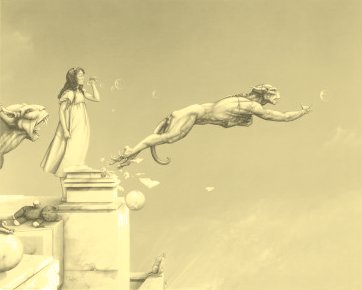
The Gargoyle

The coolness of the wall pierced through his shirt. People were screaming and running, hunted by the mortifying silence of a city with too many tall buildings. One of them followed his steps and sat beside him, leaned against his shoulder in that murky corner, then left. They often lose interest and leave, he said to himself.

People came to him in silence and went away screaming.

For so many times his mother told him not to stay alone in silence.

Silence will kill you, she would say.

She knit a hat with a little bell on it. Each movement was a sound until he couldn’t make the difference between movement and sound.

He would sound not walk, making sounds was like walking.

But then the silence grew stronger and the bell died away. Walking became walking again, rare, a language of signs. His fingernails grew long and turned ash gray. His mother knit another bell.

The radio caterwauled: cathedrals in town were inaugurating new statues and artist were currently working on new ones, more realistic than the old ones. Mother was knitting a string of little bells.

One day, an artist came to visit him and was utterly fascinated by the perfection of his body.

Then each shirt, each pair of trousers had little bells on them but silence grew mightier than ever.

That cursed artist took him away and the bells were left alone. He never went back home because he couldn’t. The artist had told him to stay still and so he sat, looking over this city with too many tall buildings.

Smoking Allowed

SHE SAT DOWN. The waiting room changed faces, caught colour over the metallic chatter of chairs and windows. She pulled the purple scarf closer to her skin and threw her hair back. The intense light coming from the huge windows made her seem dark, an unknown figure to the passengers that entered the waiting room. Her fingers clutched the purple scarf and loosened it.

Bags, cases and suitcases came and went in silence. No one talked, all smoked.

She looked up from where she was sitting. A young man came to her while desperately trying to find something in his pockets. She smiled but he didn’t see it. He took out a cigarette and pushed it softly against his lips. Her hands slid down her thighs and rested on her knees. She kept looking up at him waiting as if the briquette was dead without her vigil.

A wheeled suitcase passed them making an annoying rumble.

Occasional coughs disturbed the smoky silence.

He sat down beside her. The waiting room changed moods, colours roared through the metallic flutter of chairs and windows. He pulled his leather jacket tighter to his shoulders and drew a long breath of smoke from his cigarette then slowly pushed it out. As he sat down he became another dark figure in the room, another unknown outline to the passengers that entered the waiting room. He looked at her and smiled but she did not see it.

Above the window a black and gold sign said Smoking Allowed. No one talked, all smoked.

He bent forward with his elbows on his knees and looked down. She leaned with her head against his left shoulder while stroking his blonde hair. He took the cigarette to his lips and took a long breath. The cigarette burned like a red eye against their dark figures. She turned her face towards the window and rested her chin on his shoulder while violently blinking as to stop a tear from coming out. He took another long breath and spit it out.

Suitcases came and went like in a big dance routine. No one talked, all smoked.

The cigarette was more than half done. She came closer to him as if to smell him. Her face rested on his neck for a while and he propped his cheek against her dark hair caressing it gently. She gave an arid kiss to his neck. He smiled but she didn’t see it. Nobody saw it. They were two unknown figures in a waiting room, on a metallic bench, beside a gold and black sign which said Smoking Allowed.

Flight seventeen bound for Bern is now boarding at gate six. No one talked, some walked away.

The cigarette was almost finished. She nested her hand inside his and moved it continuously like a baby in a womb. He brushed her hand with his fingers. With one long breath the cigarette was finally over. He pushed it against the metallic rubbish can and then threw it away. He gave a short kiss to the corner of her mouth and stood up to search for his passport. She looked up as another man came to sit beside her.

The other man sat down beside her and took out a pack of cigarettes while searching his pockets for a lighter.

Bags, cases and suitcases came and went in silence. No one talked, all smoked.

The young man found his passport and made a sign with his head to the girl. It was probably time to go. He offered to help her up. She stood up and looked at her bag.

‘Do you happen to have a lighter?’ the other man asked her. She suddenly looked at him.

‘I’m sorry, I don’t smoke!’ she answered and quickly went away to catch up with the young man.

(END)